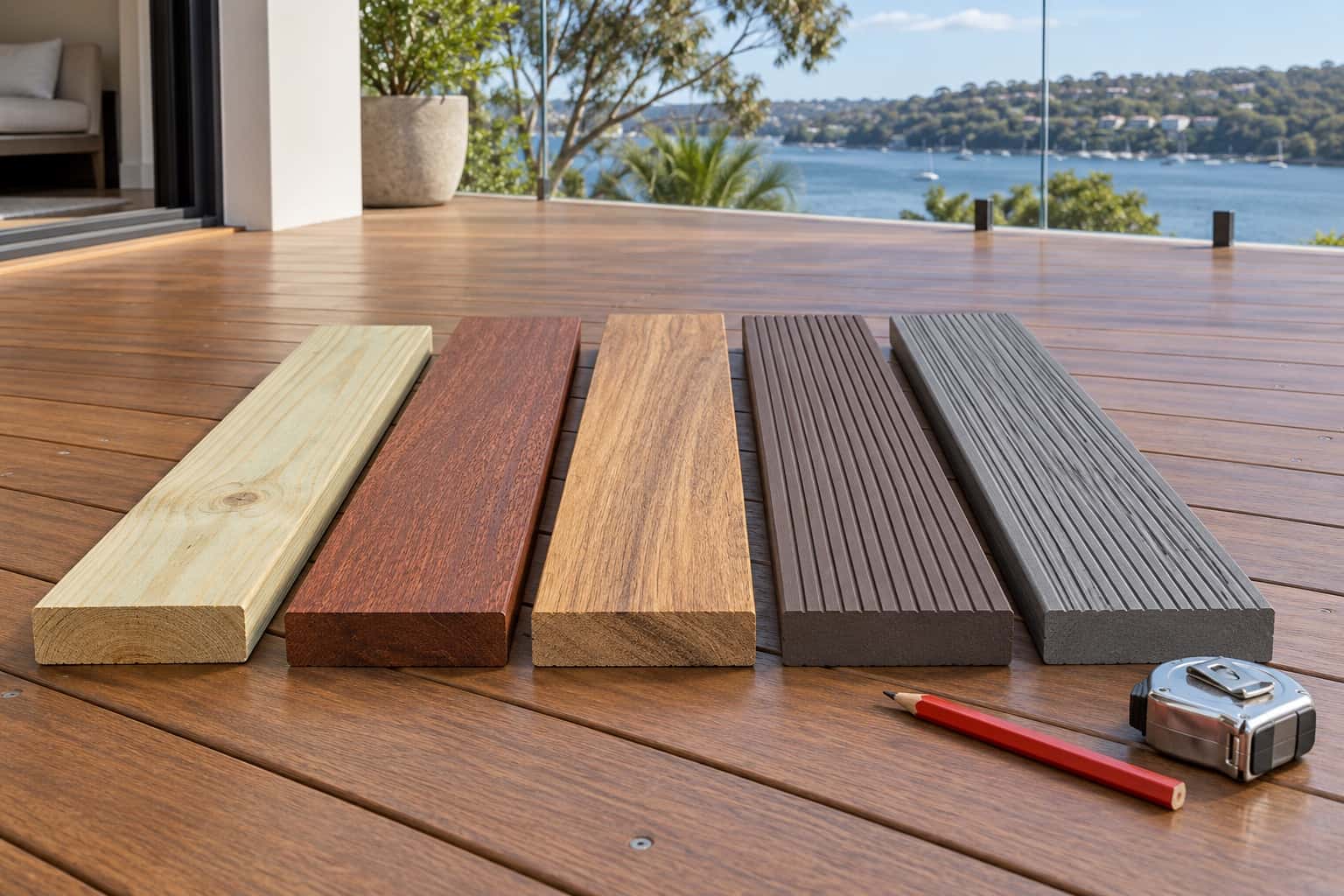
Most Sydney decks are built from one of three things: treated pine, an Australian or imported hardwood such as merbau, spotted gum, blackbutt or ironbark, or composite boards. Pine costs least and needs the most care, hardwood gives the look and feel of real timber in return for regular oiling, and composite trades some of that feel for very little upkeep.
The right choice depends on how much sun the deck gets, how you use it and how much maintenance you’re happy to do. Below we compare each material and point to decks we have built with it. For hardwood options in detail, see our hardwood decking page.
Which material suits which kind of deck?
A quick summary before the detail:
- Treated pine suits a budget deck, a deck you plan to stain or paint, or a low deck where looks matter less than cost.
- Merbau suits anyone who wants a warm, reddish-brown hardwood that is easy to source and work with.
- Spotted gum suits a deck where you want strong grain and a natural mix of colours.
- Blackbutt suits a lighter, more even look.
- Ironbark suits a very hard-wearing surface where its weight and darker tones are welcome.
- Composite suits busy households, pool and spa surrounds and anyone who would rather wash a deck than oil it.
What is treated pine like as a deck?
Treated pine is plantation softwood that has been pressure-treated against rot and insects. Decking boards are treated for use above ground, while any timber in contact with the ground needs a higher treatment level.
Pine is softer than hardwood, so it dents more easily under furniture and heels. It also moves more as it wets and dries, and boards can cup or split if they are left uncoated. In return it is the least expensive board, and it takes stain and paint well.
Our deck in Monterey is a good example. It was built from treated pine and then finished with a merbau-coloured stain, so it reads as a darker timber deck at a lower cost. A stained pine deck needs a fresh coat more often than oiled hardwood, so budget for that.
Why do so many Sydney decks use merbau?
Merbau is an imported tropical hardwood with a reddish-brown colour that darkens over time. It is widely stocked in Sydney in standard board sizes, it is stable once laid and it oils well.
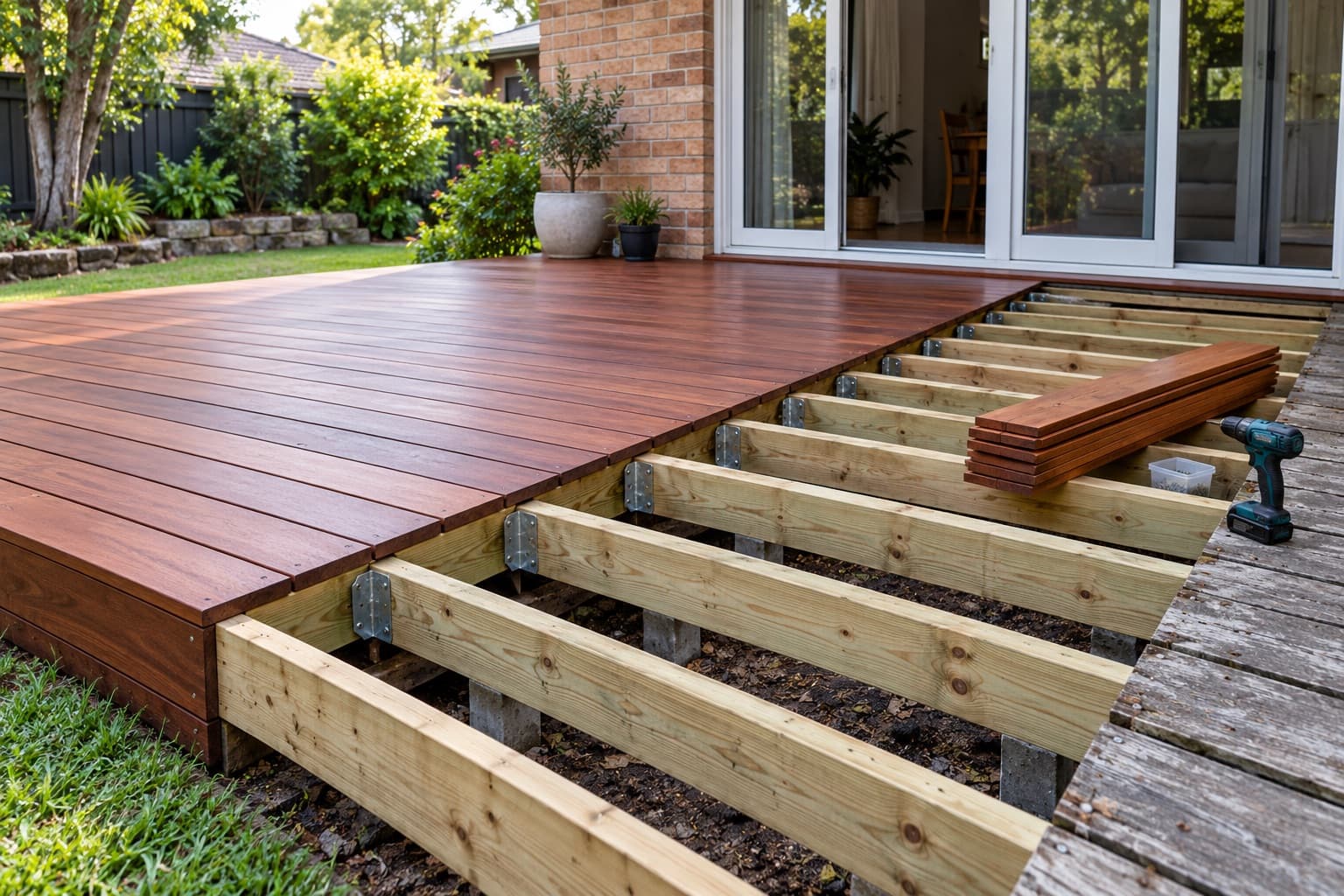
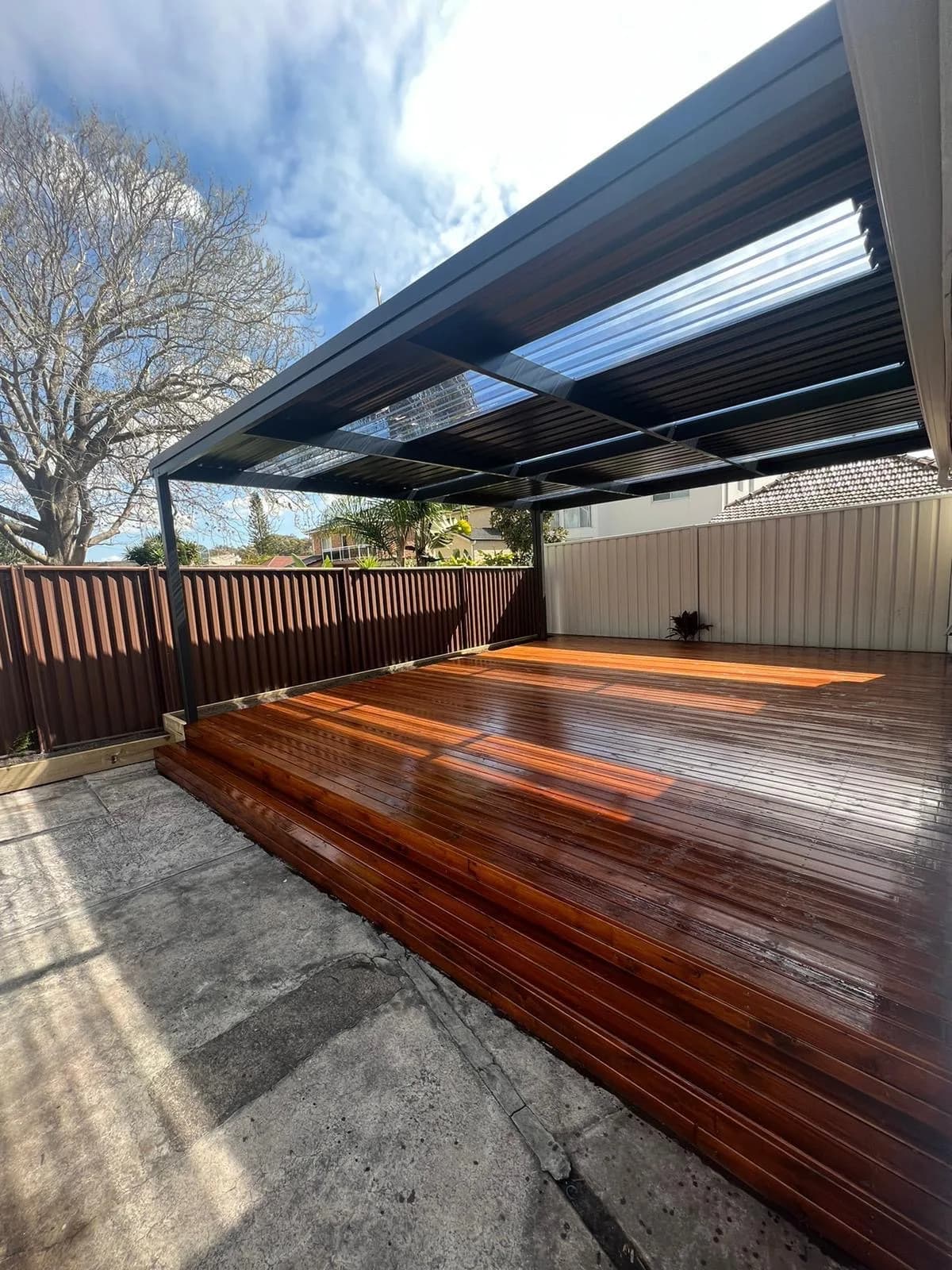
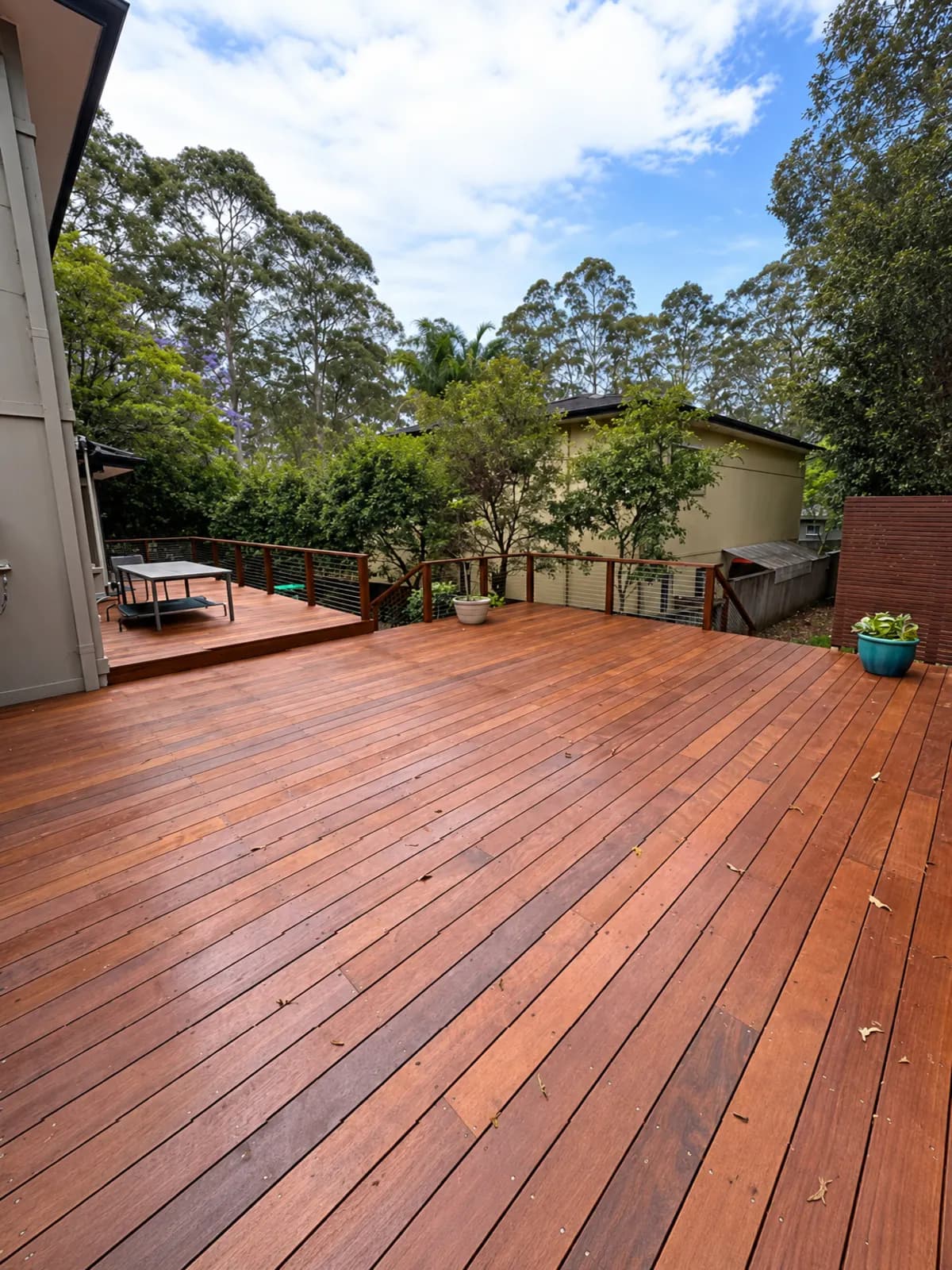
We have built several merbau decks around the North Shore. In Lane Cove West, a long merbau deck runs along the house under a timber pergola, with steps down to the lawn. In Lane Cove, a raised merbau deck crosses the back of a new house, with a boxed stair clad in matching merbau. In Wahroonga, a high merbau deck sits on a sloping bush block with timber stairs and a wire balustrade.
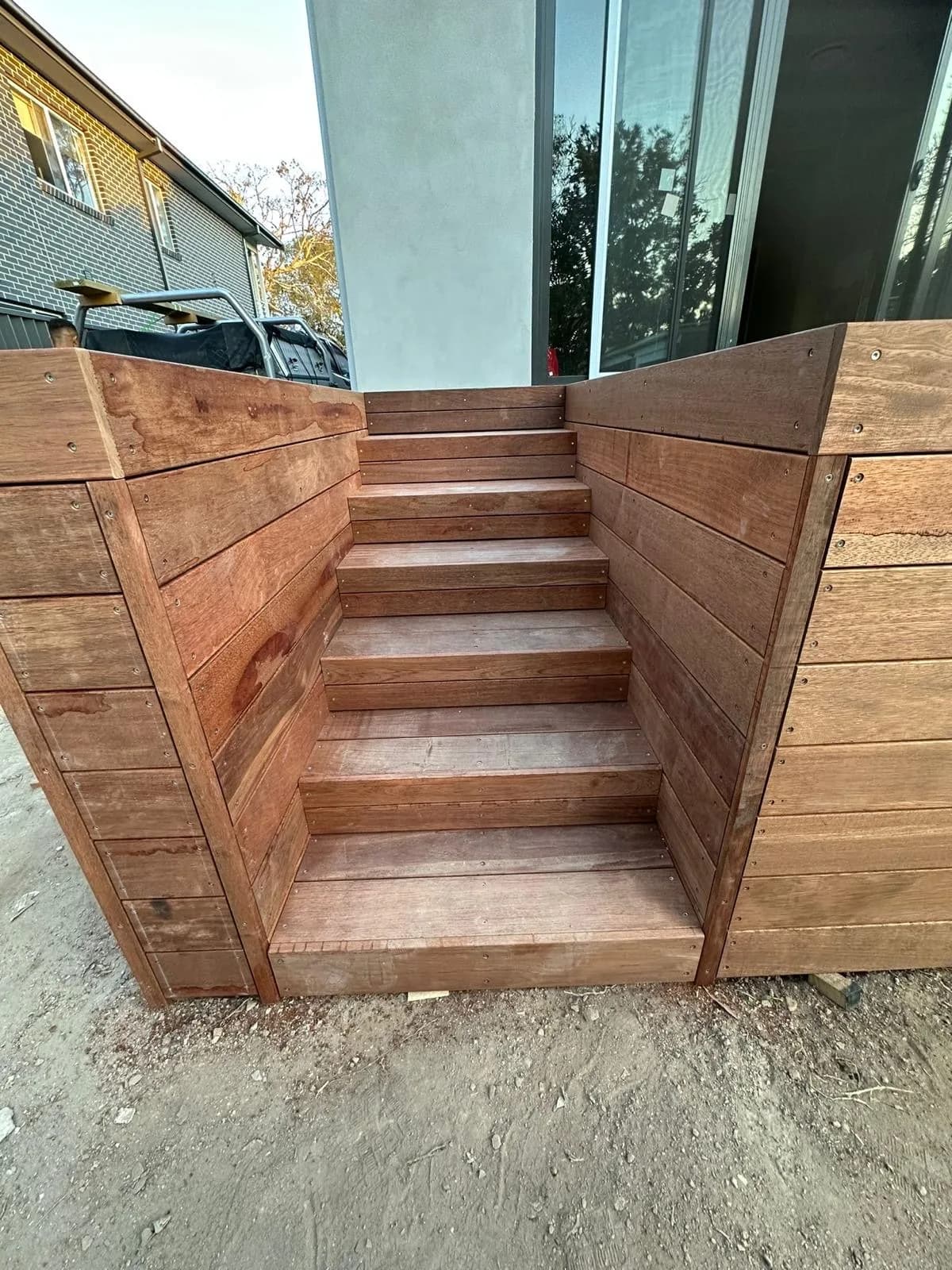
One thing to plan for: new merbau releases tannins when it gets wet. For the first months, rain can carry a red-brown stain onto paving, concrete or render below the deck. It eases over time, and it’s worth protecting light surfaces nearby while the boards settle.
How do spotted gum, blackbutt and ironbark compare?
These three are Australian hardwoods, and each has its own character.
- Spotted gum varies from pale grey-brown to deep brown within the same delivery, with a strong, often wavy grain. It is hard and dense, and the colour variation is a big part of its appeal.
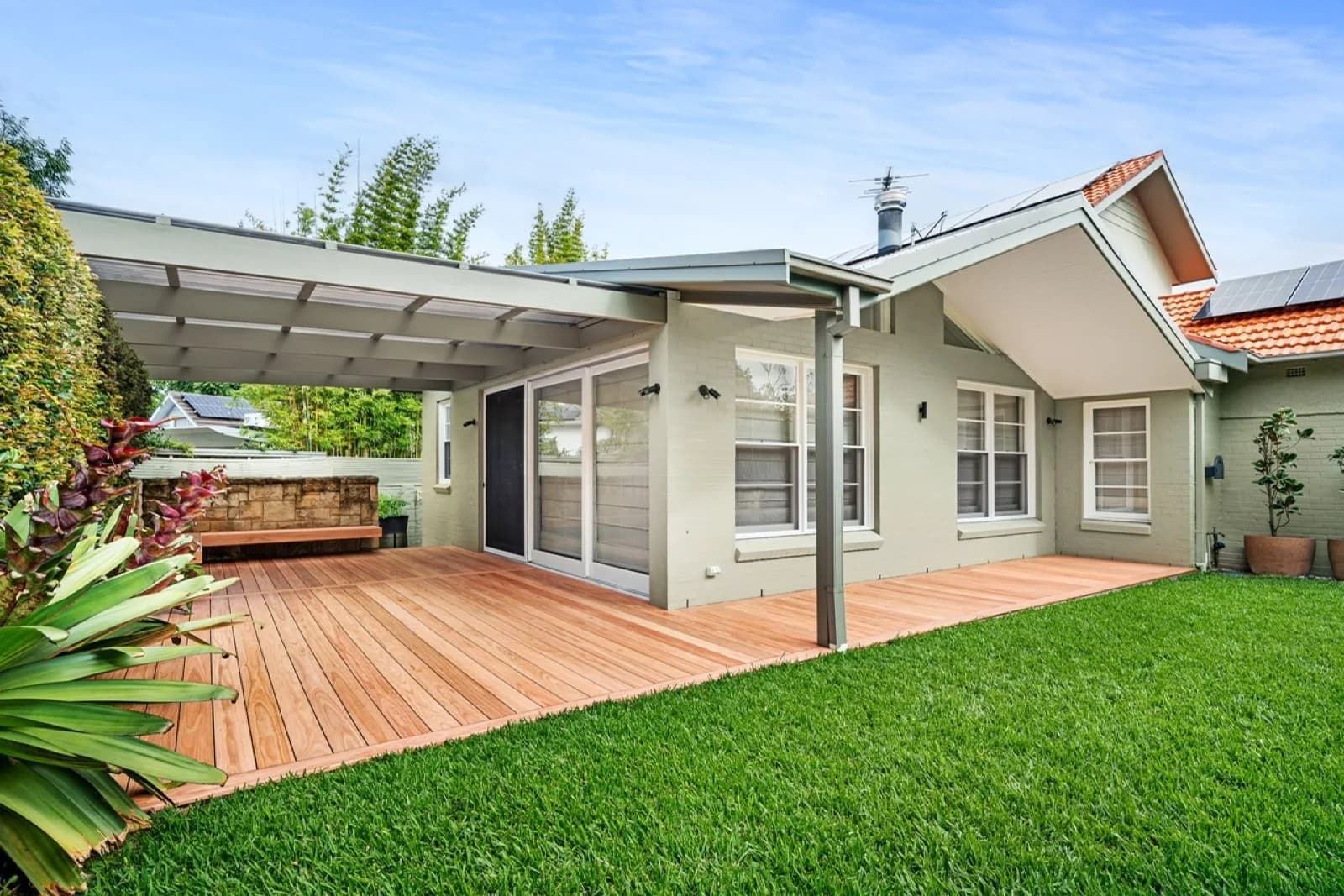
- Blackbutt is a pale golden-brown with a more even colour. It suits a lighter, modern look and sits well beside light render or painted weatherboards.
- Ironbark is among the hardest and heaviest decking timbers, in red-brown to dark tones. Its density makes it hard-wearing, but it is also heavier to handle and harder to cut and fix, which can show up in labour.
All hardwoods weather to a silver-grey if they are left unoiled, and all can show fine surface cracks as they dry. Regular oiling keeps the colour and slows that weathering. Availability and price change with supply, so we check current stock for the board size you want before quoting.
What is composite decking like to live with?
Composite boards are made from wood fibre and plastic, and many current boards have a tougher plastic outer layer. They come in a set colour, don’t need oiling and won’t splinter. Most upkeep is washing.
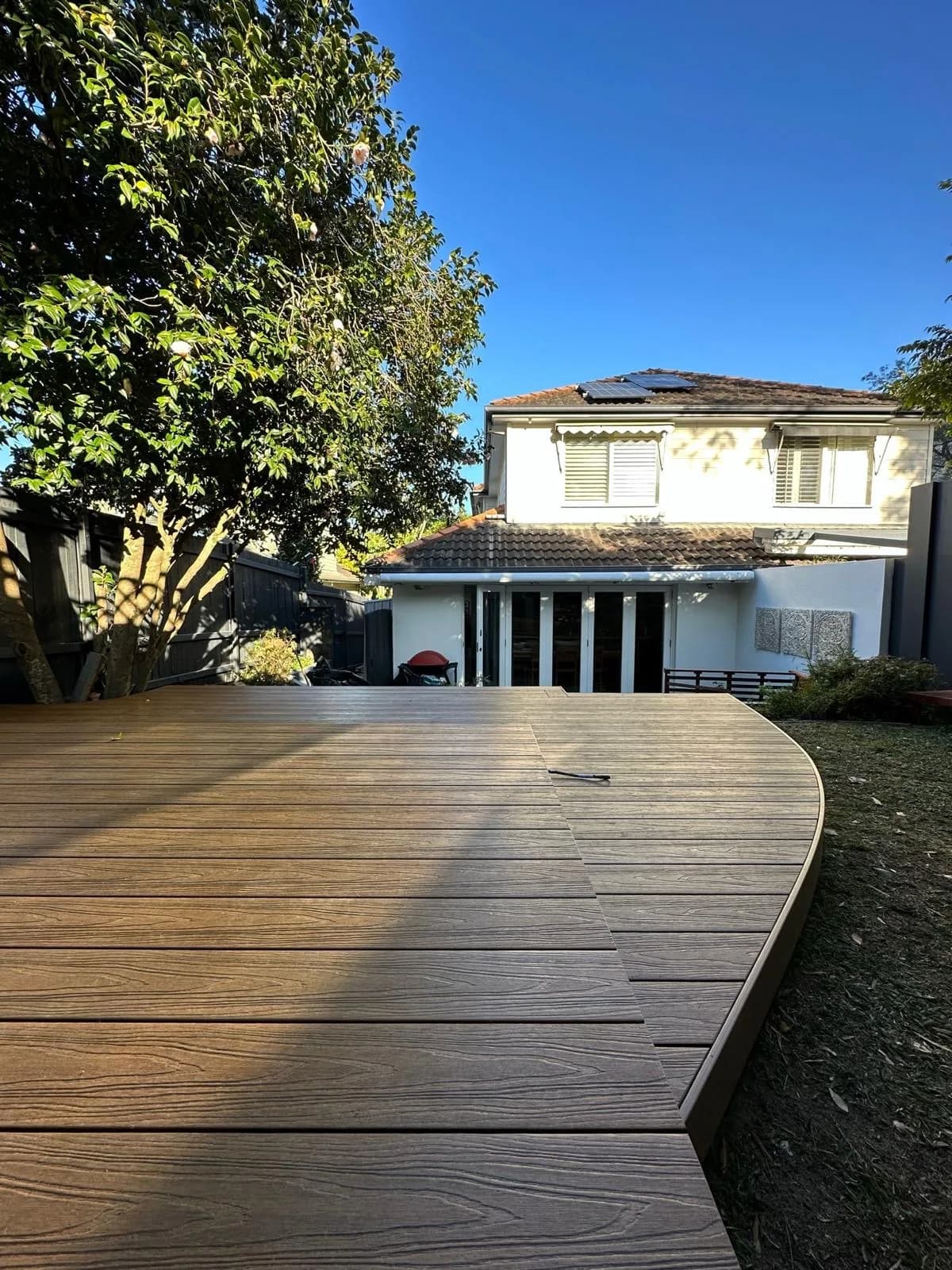
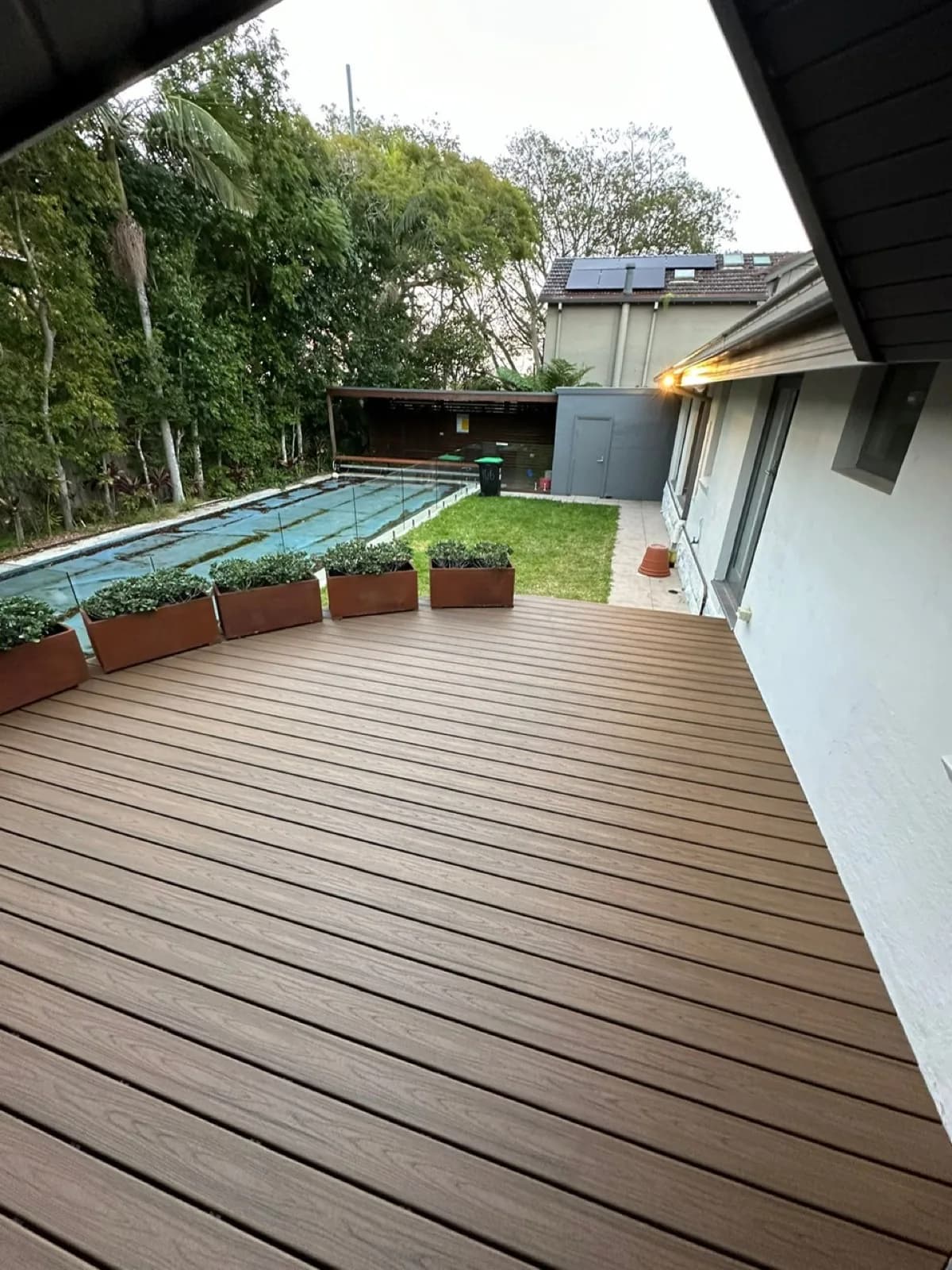
Most of the decks on our projects page are composite. In North Ryde, a curved composite deck steps across two levels on a sloping yard and is built around existing trees. In Birchgrove, composite covers an upper balcony, a clad external stair and a rooftop terrace bench. In Bellevue Hill, a curved composite deck with wide steps sits beside the pool. In Dundas, an in-ground spa is set into a grey composite deck, and in Pemulwuy a dark composite deck wraps around a turf area in a new-build yard. In Ashfield, composite runs down a narrow side passage.
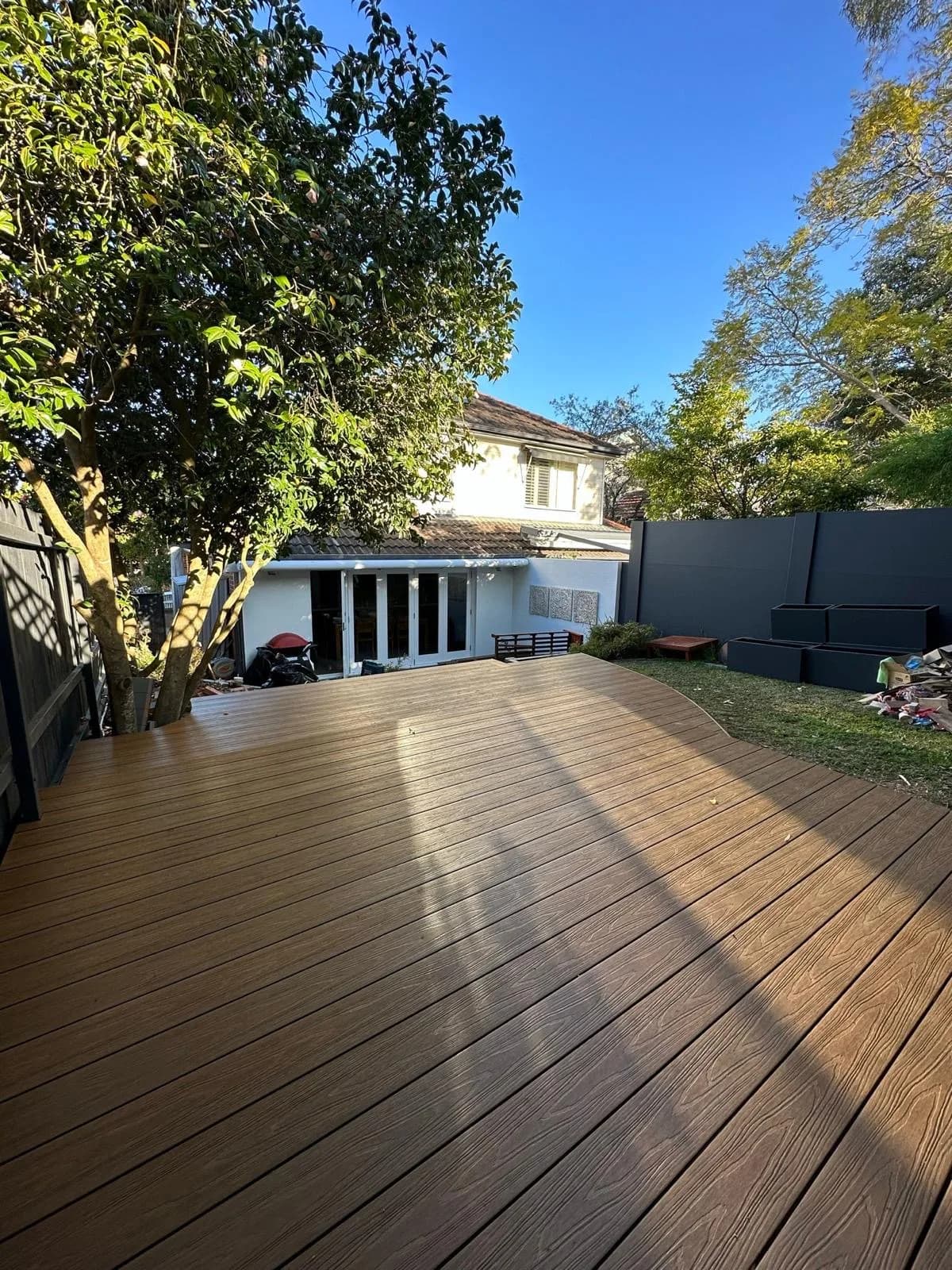
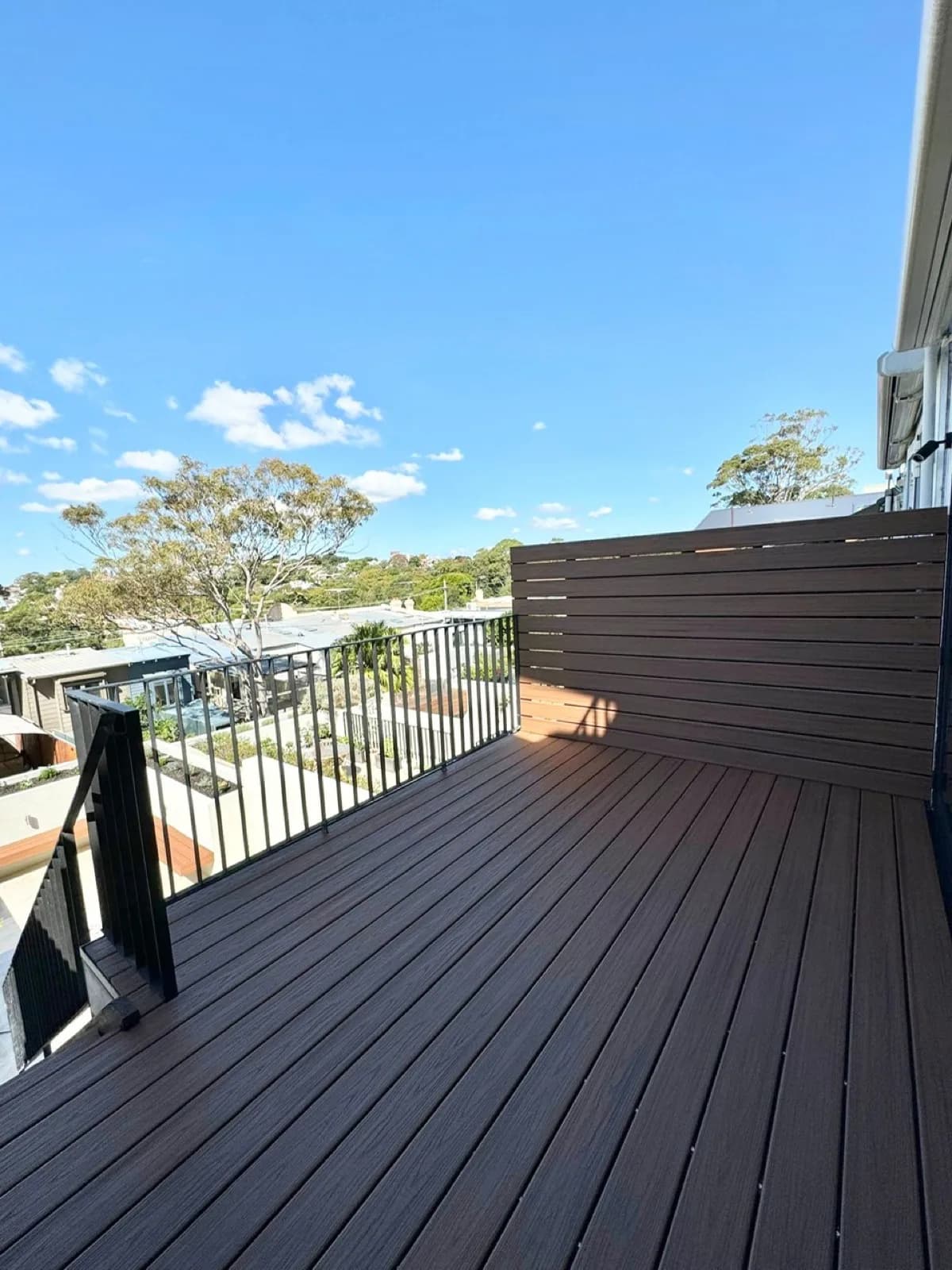
The trade-offs are cost, feel and installation rules. Composite usually costs more to buy than timber, and some people find it feels less like timber underfoot. Boards grow and shrink in length with temperature, so manufacturers set the gaps, the joist spacing and the fixings, and the frame has to be built to those rules.
Which boards get hottest in the sun?
Colour matters more than anything else. Dark boards of any material absorb more heat, and in full summer sun a dark composite deck can get uncomfortably hot under bare feet. Lighter greys and timber tones stay cooler.
If your deck faces north or west with no shade, ask for samples and leave them in the sun for an afternoon before you choose. A pergola or shade over the deck also makes a big difference.
Does a bush fire prone block limit the choice?
It can. Parts of Sydney, including many North Shore and Hills blocks that back onto bushland, are mapped as bush fire prone land. New building work on those lots is generally built to Australian Standard AS 3959, based on the lot’s bush fire attack level (BAL), and that can limit which decking materials and frame details are allowed, especially close to the house.
The rules depend on the specific lot, so check whether your block is mapped and what its BAL is before you settle on boards. Your council, a certifier or a bush fire consultant can confirm what applies.
How do you choose?
Start with three questions. How much sun does the deck get? How much upkeep are you willing to do each year? Do you want the look and feel of real timber, or an even colour that stays put?
If you want real timber and don’t mind oiling, merbau or one of the Australian hardwoods is usually the answer. If cost comes first, treated pine with a good stain works well. If upkeep is the deciding factor, composite is worth the extra cost. Our timber or composite guide goes deeper on that choice, and the deck cost guide covers what changes the price.
For each material in more detail, see hardwood decking, merbau decking, timber and treated pine decking and composite decking.
When you have a material in mind, send us photos of the space and we can price it.
Also check the builder’s licence on the NSW Government licence register. Timbaland Carpentry holds NSW Contractor Licence 276621C in the Carpenter class.