In this guide · 5 sections
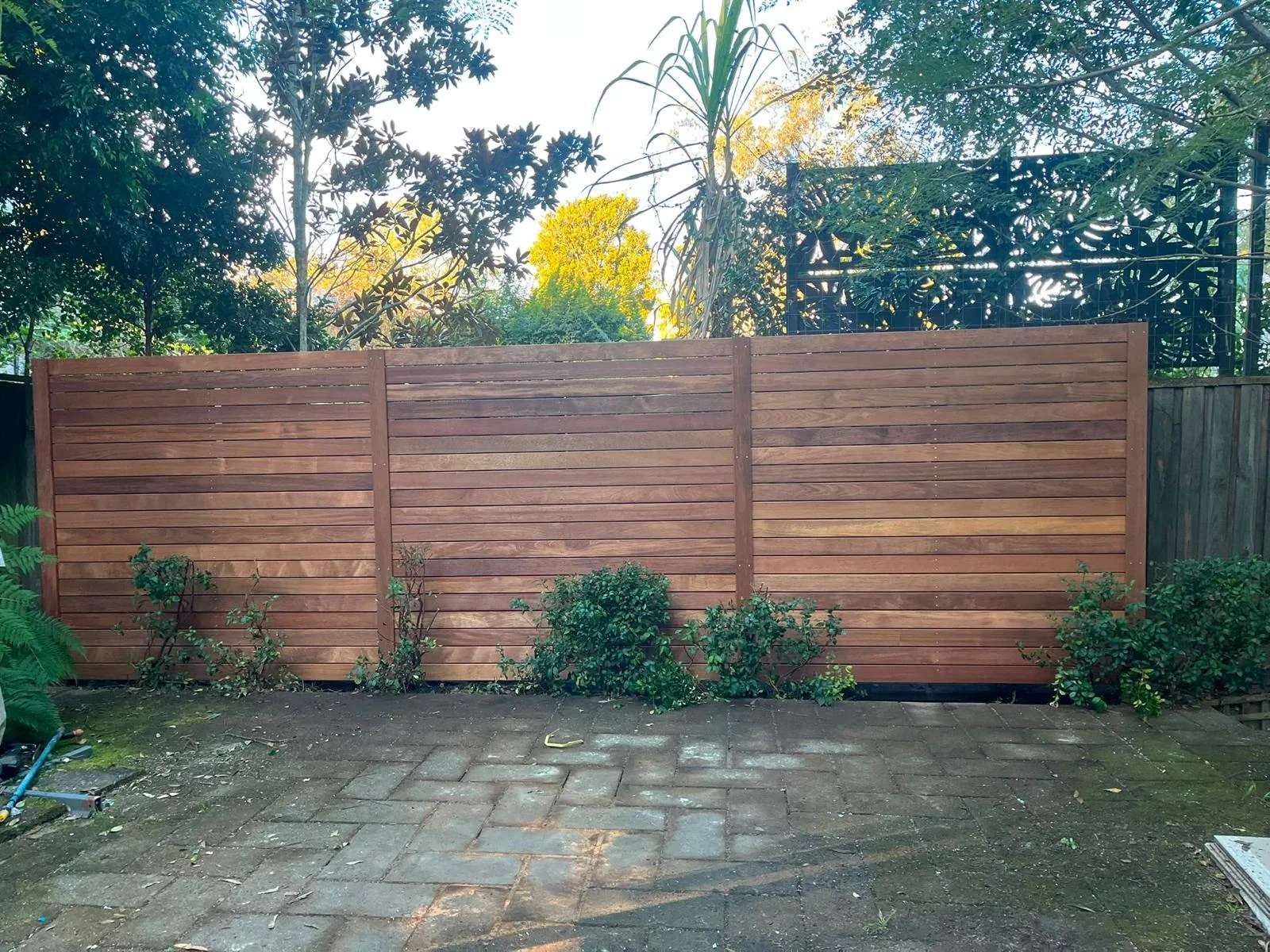
Where your screen lands in those ranges depends on the material, the height, what it fixes to and how exposed it is to wind.
Read on for what the prices cover, what makes one screen cost more than another and how timber and composite compare. Our privacy screens page has the screen planner and screens we have built.
What do the prices cover?
The bands are per square metre of screen, so a 6 metre run at 1.8 metres high is 10.8 m². They include GST:
- Timber screen
- $250–$500per m²
- Composite screen
- $300–$550per m²
What the prices cover
- Posts and footings, or brackets fixed to a sound deck or fence
- The battens and fixings
- Labour and clearing up the site
Priced separately
- A matching gate: $500–$1,500 each
- Deeper footings on a windy or exposed site, often 15–30% more
- Oiling, staining or painting a timber screen
- Removing an old screen or fence top
A typical job
A 6 m timber screen 1.8 m high (10.8 m²) comes to about $2,700–$5,400.
A screen framed into a new deck, or fixed to a sound fence, sits towards the bottom of the bands. A tall freestanding screen with tight gaps on a windy balcony sits towards the top.
What makes one screen cost more than another?
- Area. Screens are priced by their size, so height matters as much as length. Going from 1.8 to 2.1 metres adds about a sixth to the area.
- Material. Treated pine costs least, hardwood more, and composite battens usually the most.
- Batten size and gaps. Tighter gaps use more battens per metre. Wider battens cover more with fewer fixings.
- What it fixes to. A screen framed into a new deck, or fixed to a sound fence, needs fewer new posts than a freestanding screen on its own footings.
- Wind. A tall screen with small gaps catches the wind like a sail, so its posts, brackets and footings have to be sized for that, especially on balconies and raised decks.
- Finish. Timber is oiled, stained or painted, which is part of the price. Composite needs no coating.
To see how the batten width and gap change what a screen hides, try the screen planner on our privacy screens page.
Timber or composite?
Timber battens cost less to buy and can be any colour you like, but need a fresh coat every year or two in full sun. Composite costs more up front but only needs washing, and it can match a composite deck.
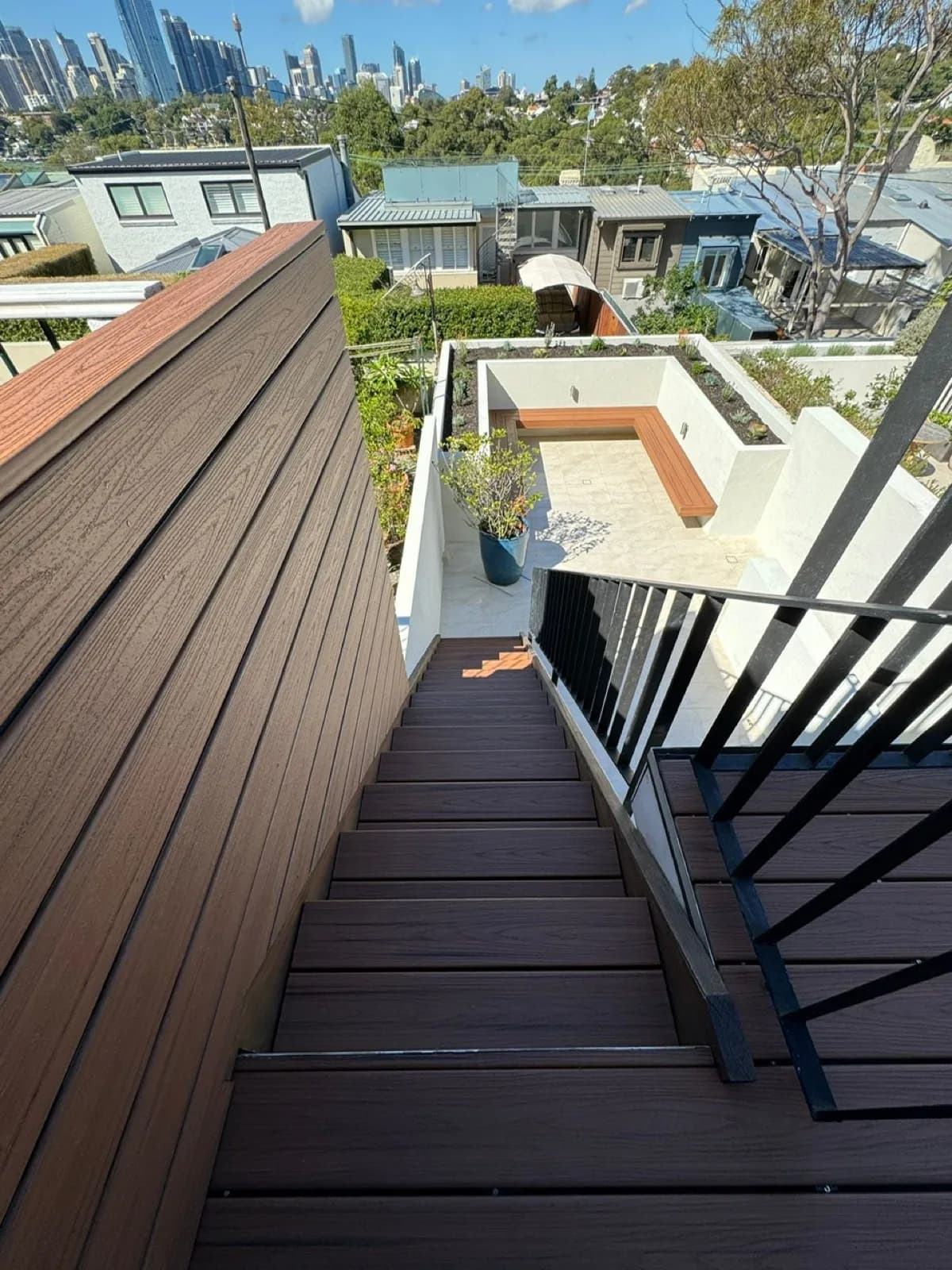
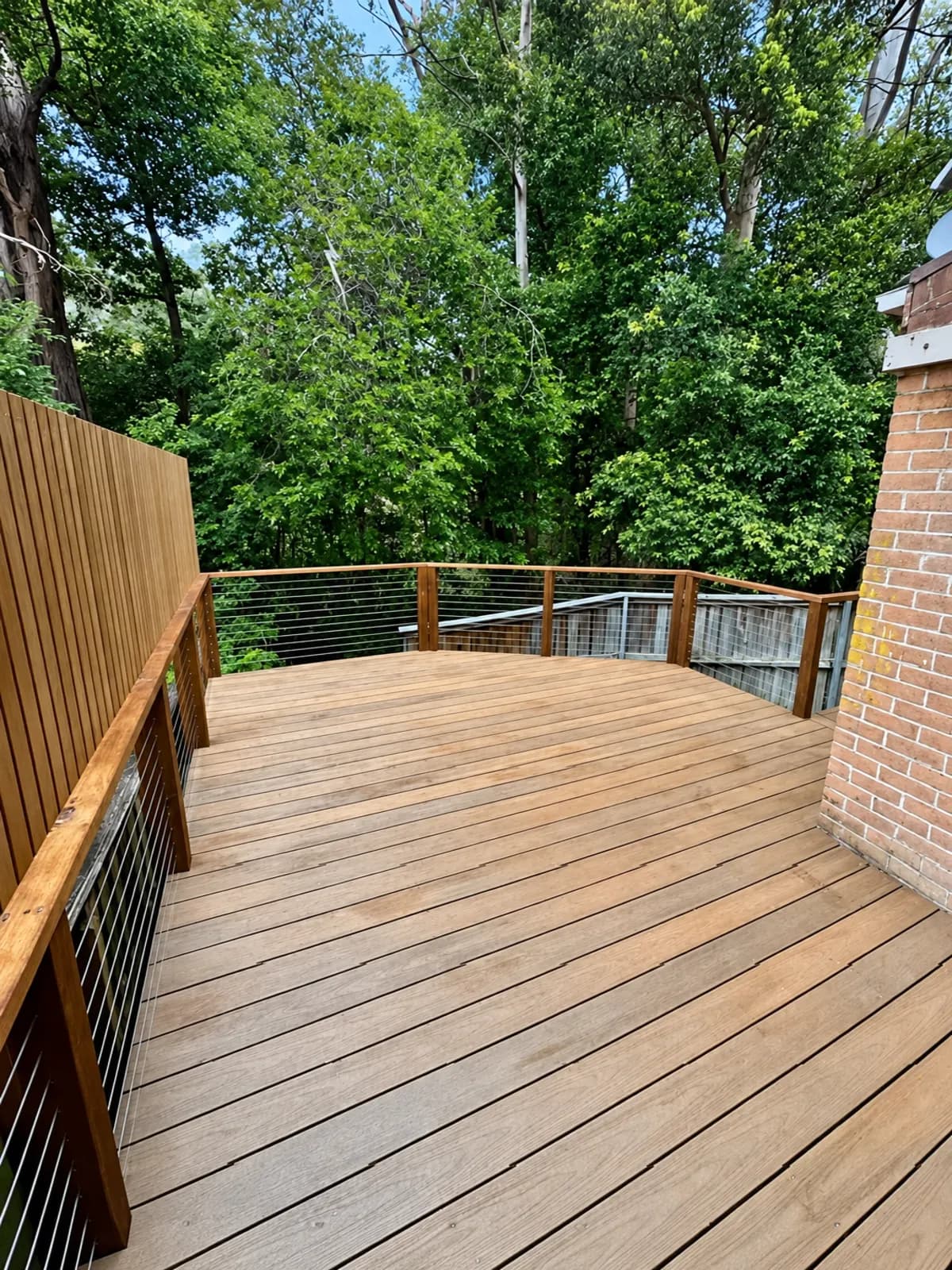
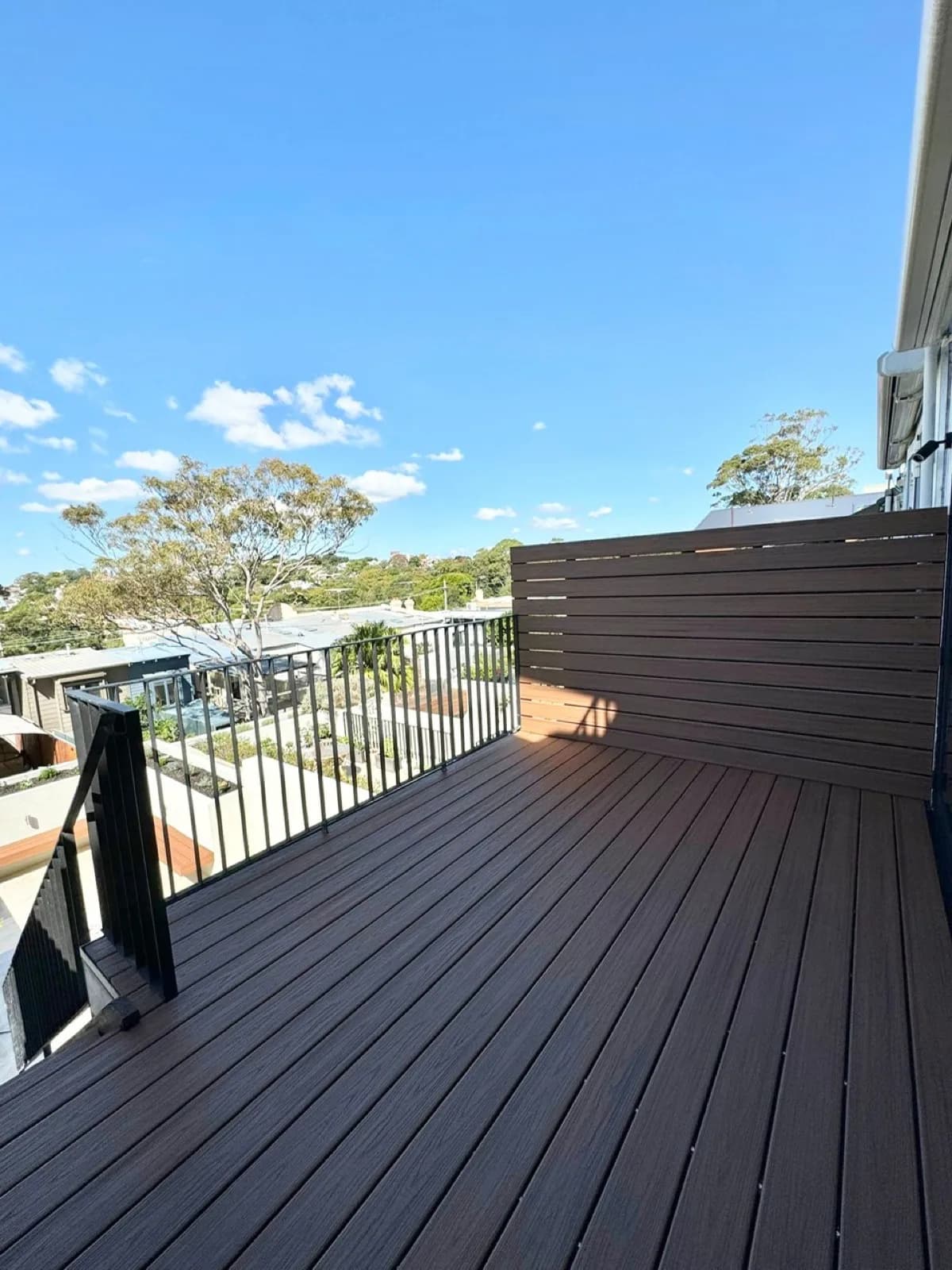
At Beecroft, we built an elevated composite deck with a timber batten privacy screen. At Birchgrove, the balcony screen is composite, matched to the composite deck.
Will the screen need council approval?
Many screens in NSW are exempt development within limits on height and position. On a boundary, the height limit includes any top-up on the fence, and a screen on a heritage-listed lot, or a tall screen, may need approval. Balconies in a strata building also need the owners corporation’s agreement. We check the rules for your block when we measure.
Work on a shared boundary fence normally needs your neighbour’s agreement too. A screen fully on your side, on its own posts, is simpler, but it’s still worth talking to them early.
How do you get a real figure for your screen?
Send us a photo from where you sit and one of what you want to block, with a rough length and height. We then look at the sight lines, what the screen will fix to and how exposed it is, and give you a written quote.
When you compare quotes, check they cover the same things:
- the batten material, size and spacing
- the posts, brackets and footings, or how it fixes to the deck or fence
- the finish, if it is timber
- any gate
- removal of an old screen or fence top.
Also check the builder’s licence on the NSW Government licence register. Timbaland Carpentry holds NSW Contractor Licence 276621C in the Carpenter class.