In this guide · 5 sections
For balustrades, timber and wire sit towards the lower end and glass well above them. Where your job lands depends on the height, the number of steps, the materials and what the stair or balustrade fixes to.
What the prices cover comes next, then what makes one cost more than another and what happens when there is rot underneath. Our stairs and balustrades page covers the work itself.
What do the prices cover?
The stair bands are by the step or by the flight, and the balustrades by the lineal metre, fixed into a sound deck frame or structure. They include GST:
- Deck steps
- $205–$460per step
- Deck stairs
- $1,150–$5,200per flight
- Timber balustrade
- $200–$450per metre
- Wire balustrade
- $300–$500per metre
- Semi-frameless glass
- $400–$700per metre
- Stair handrail only
- $150–$300per metre
What the prices cover
- Stringers, treads and risers, or the posts, rails and infill of a balustrade
- Fixing into a sound deck frame or structure
- Labour and clearing up the site
Priced separately
- Removing an old stair or balustrade
- Repairs to rot found in the frame behind it
- Oiling, staining or painting the timber
- Cladding a boxed stair to match the deck
A typical job
A flight of timber stairs from a deck to the garden with 6 m of timber balustrade comes to about $2,350–$7,900.
A single straight flight off a low deck sits towards the bottom of the bands. A tall stair with a landing, a boxed stair clad to match the deck or a long run of glass sits towards the top.
What makes one stair cost more than another?
- Height. A higher deck needs more steps, longer stringers and often a landing part way down.
- The fit. Every riser and tread in a flight has to match, within the limits the building code sets. Fitting that between two fixed levels sometimes means adding a landing or turning the stair.
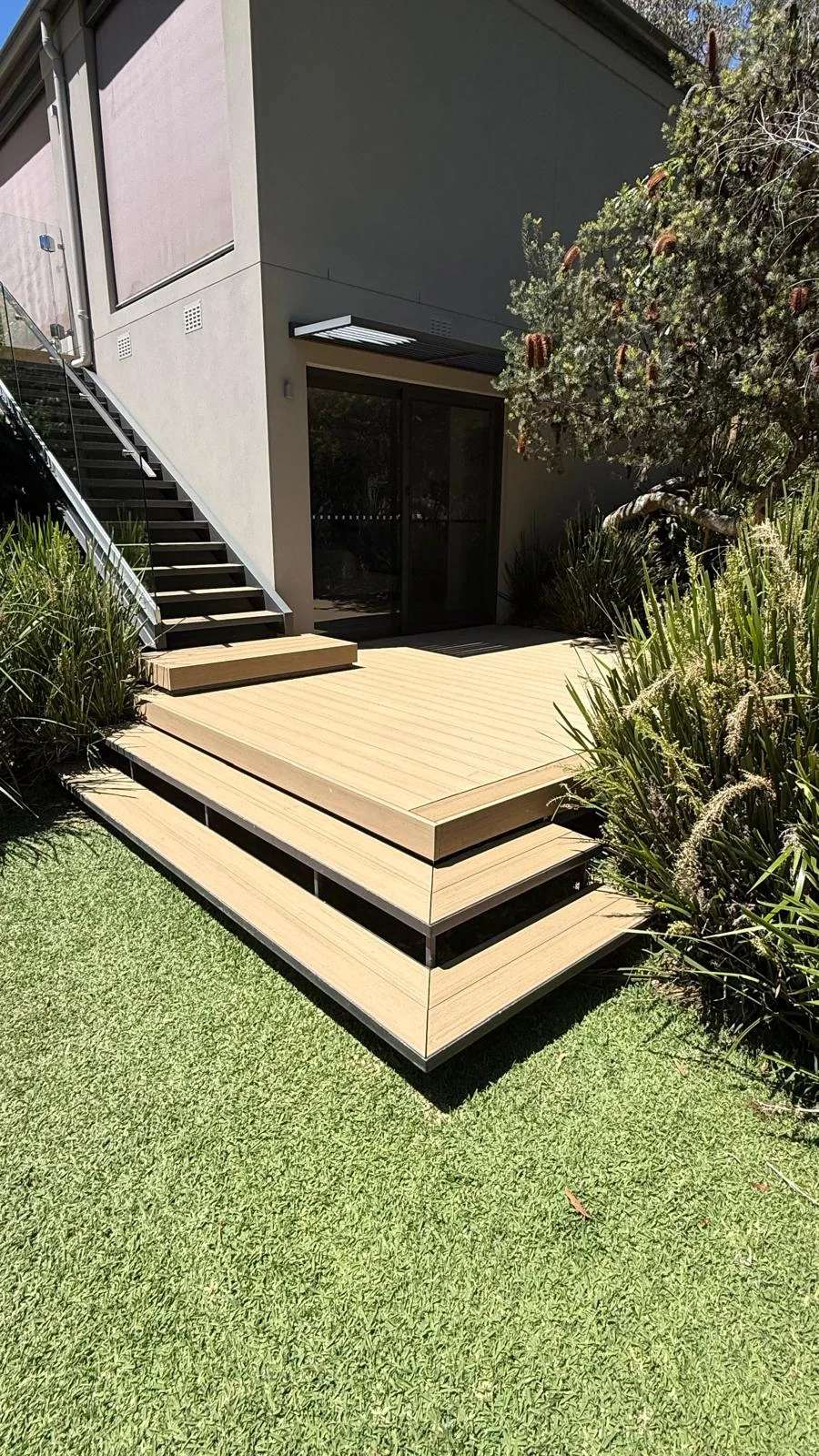
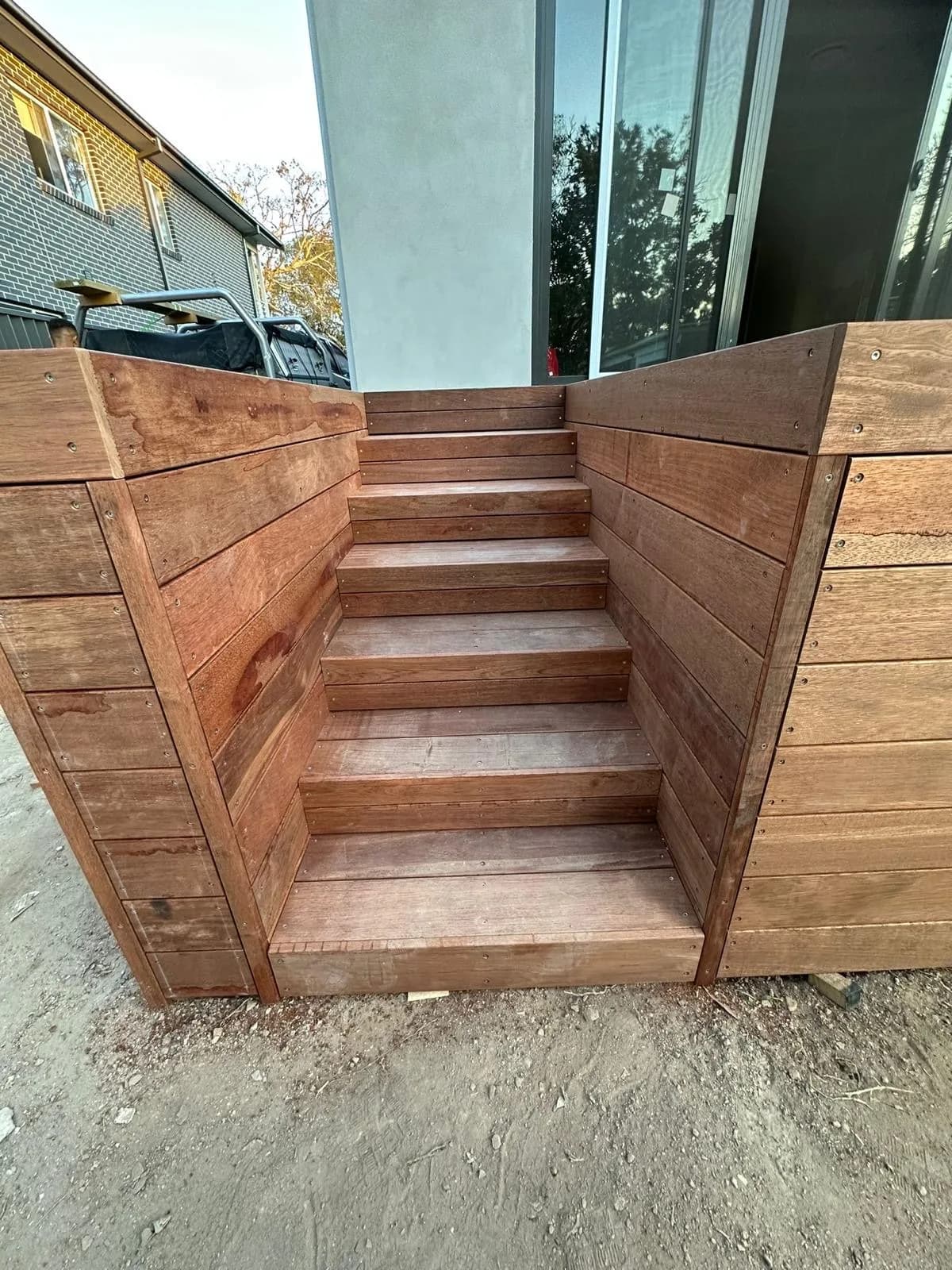
- Open or boxed. An open stair of treads on stringers costs less than a boxed stair clad in decking boards to match the deck.
- Handrails and balustrade. A stair that needs a handrail or balustrade has it priced by the metre on top.
- What is already there. Replacing an old stair means taking it out first, and checking what it was fixed to.
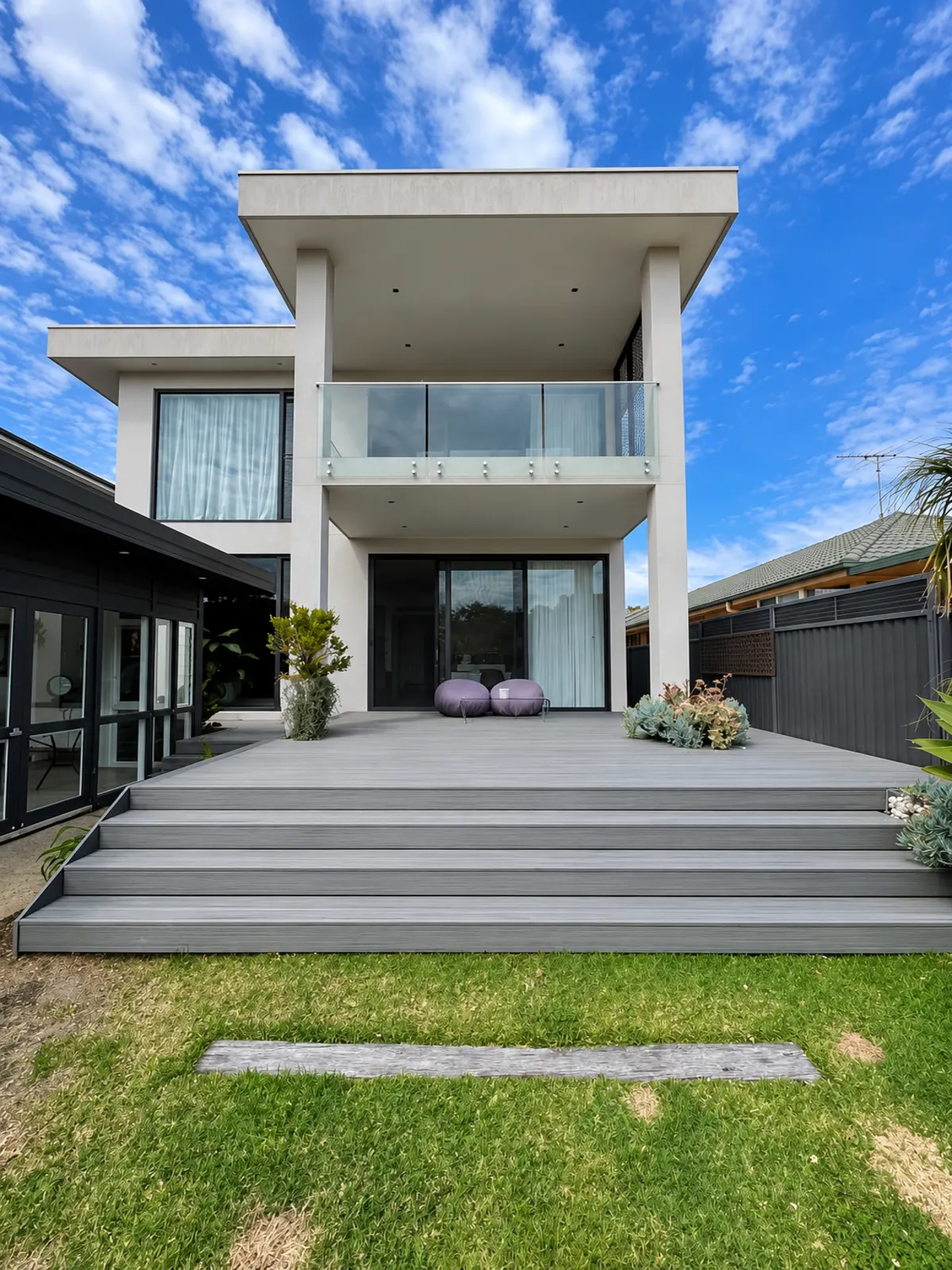
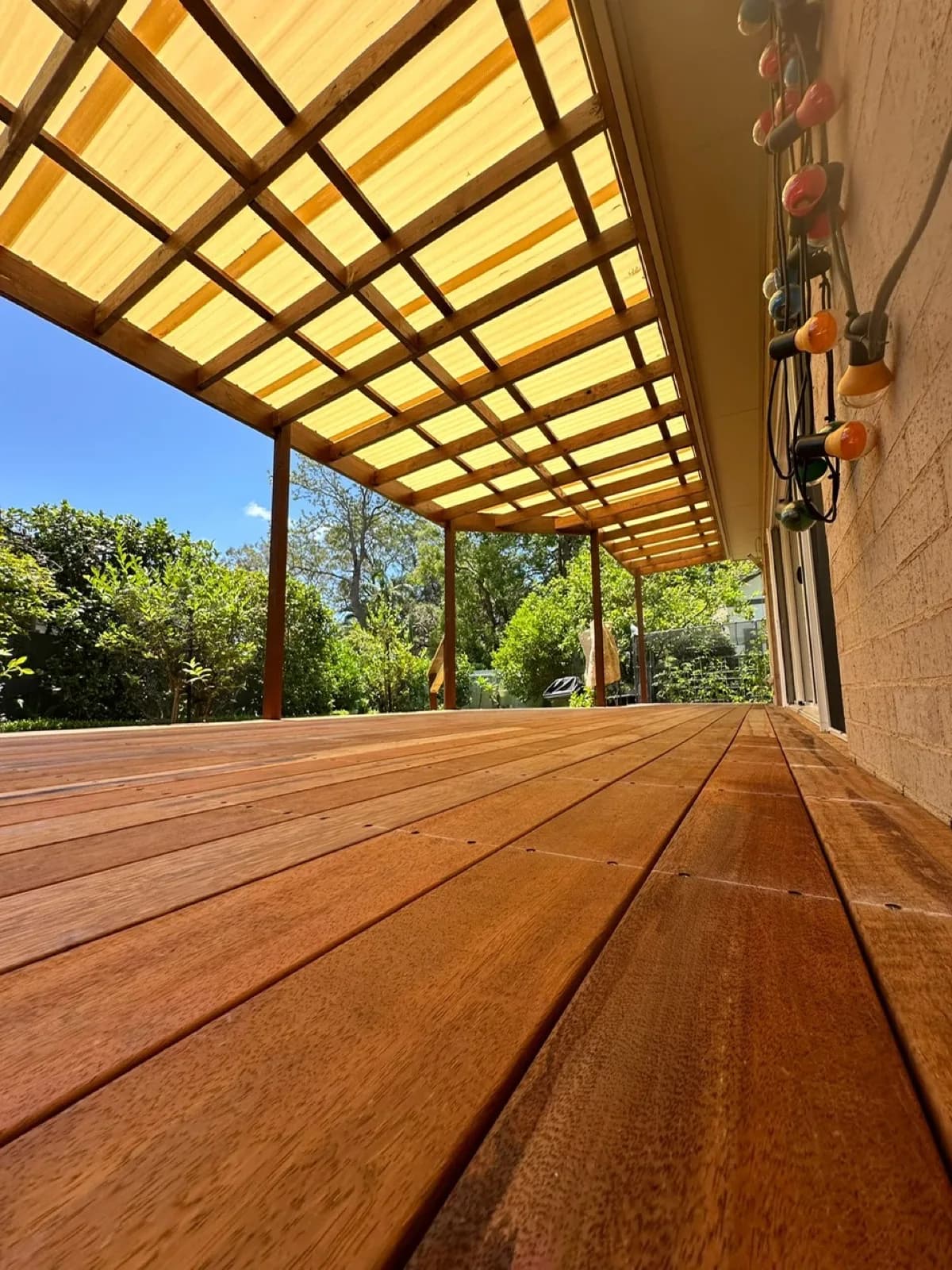
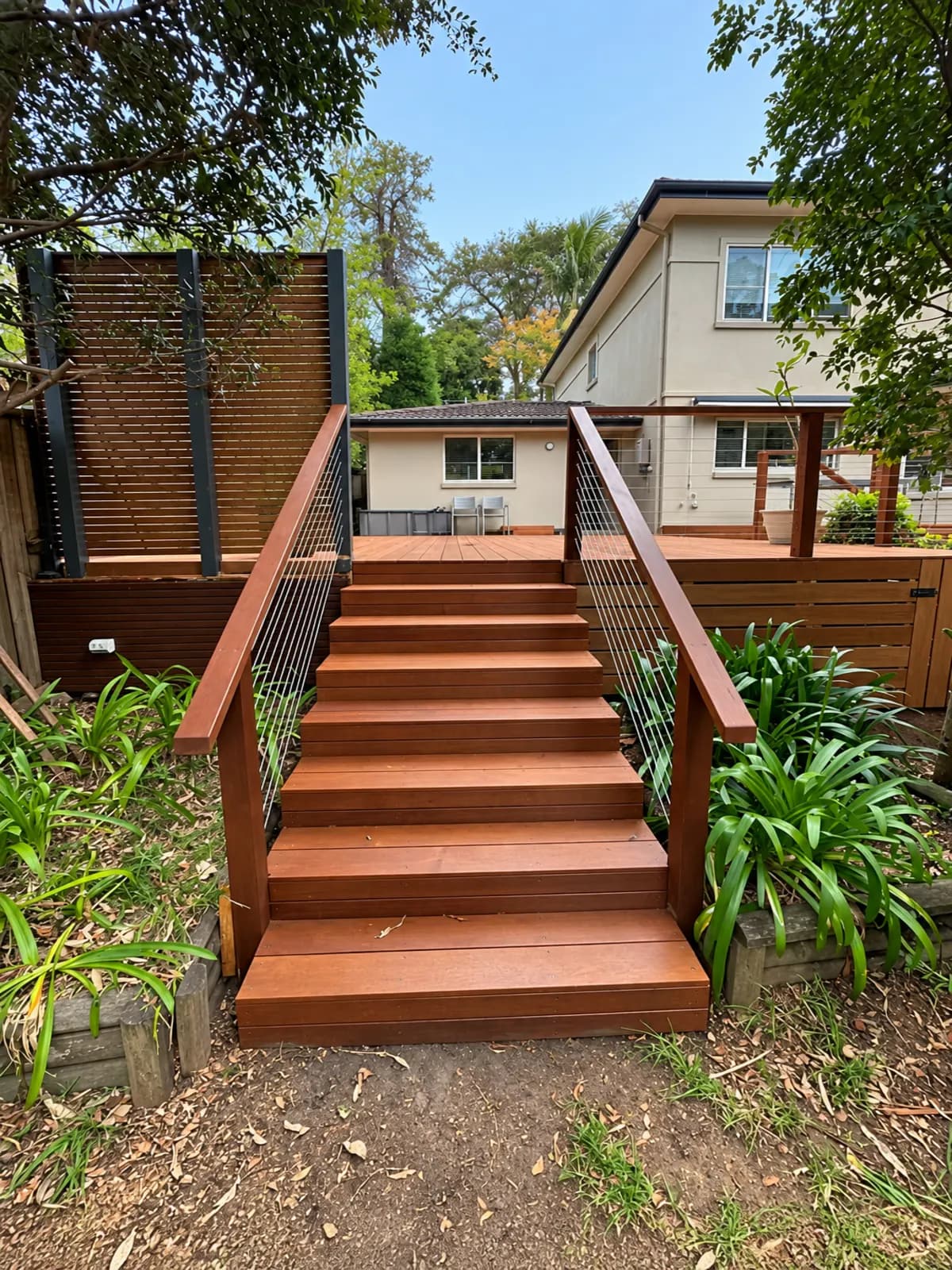
At Lane Cove, we built a raised merbau deck across the back of the house with a boxed stair clad in merbau to match. At Wahroonga, the merbau stairs have a timber handrail and a wire balustrade.
What makes one balustrade cost more than another?
- Length. Balustrades are priced by the metre, so a deck that wraps around a house costs more than a short balcony run.
- Material. Timber costs least, wire more, and glass the most.
- Posts and fixings. Every post has to be fixed solidly into the deck frame or the structure below, and a weak frame needs strengthening first.
- Height above the ground. A deck or landing more than a metre above the ground below needs a balustrade, and on much higher decks the rules also limit horizontal parts a child could climb.
Wire balustrades have one more cost to know about: tensioned wire stretches over time and needs re-tensioning to stay within the gap rules.
What if there is rot underneath?
Once old boards, treads or a balustrade come off, repairs can uncover more rot in the posts, bearers or stringers than anyone could see. We tell you before doing any extra work, and price it separately. Our guide to deck repair costs covers repairs to the frame.
How do you get a real figure?
Send us photos of the stair or deck edge and how high it is off the ground. We then check the framing, fixings and footings, and give you a written quote.
When you compare quotes, check they cover the same things:
- the timber for the stringers, treads and risers, and any cladding
- the balustrade material, the number of posts and how they are fixed
- handrails
- removal of the old stair or balustrade
- the finish, if it is timber.
Also check the builder’s licence on the NSW Government licence register. Timbaland Carpentry holds NSW Contractor Licence 276621C in the Carpenter class.