In this guide · 8 sections
The price of a deck in Sydney comes down to its size, how high it sits off the ground, what the frame and boards are made of and how easy the site is to work on. The only reliable figure is a quote made after someone has measured the site, with the frame, boards, stairs, balustrade and removal of any old deck shown as separate items.
This guide explains what moves the price up or down, so you can plan the deck you want and read a quote with confidence. When you are ready for a figure, our decking page explains how we measure and quote.
What makes one deck cost more than another?
Two decks of the same area can be priced a long way apart. The main reasons are:
- Area. More square metres means more frame and more boards, but the cost per square metre often falls as a deck gets larger, because setting up, footings and edges are spread over more area.
- Height and the frame. A low deck on a flat yard needs short posts and little bracing. A deck high off a sloping block needs taller posts, deeper footings, more bracing, stairs and a balustrade.
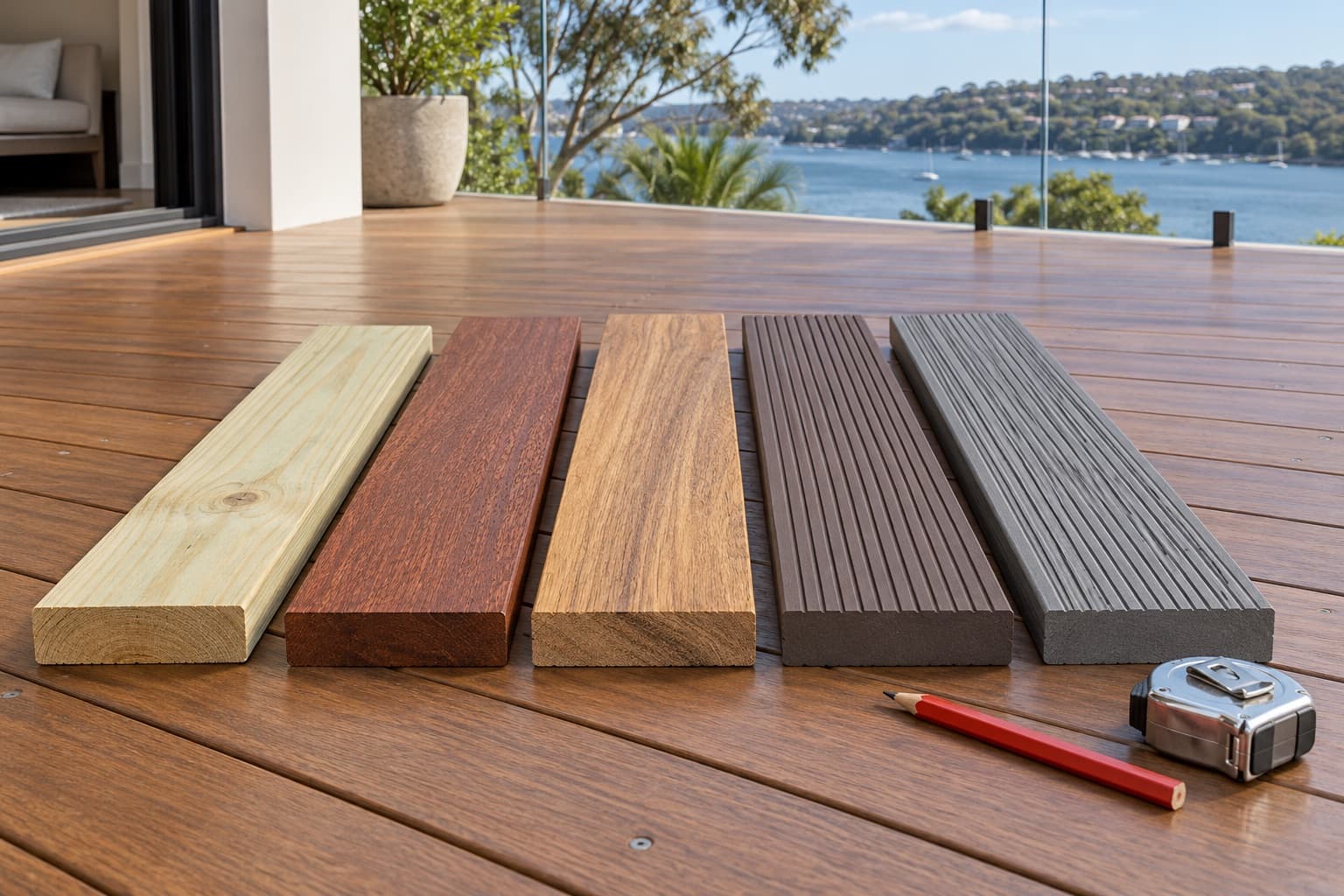
- The boards. Treated pine costs least, hardwoods such as merbau and spotted gum cost more, and composite boards usually cost more again.
- Access. Every board, bag of concrete and length of timber has to be carried in. A narrow side passage or a backyard down a flight of steps adds labour.
- The old deck. Pulling up a tired deck and taking it away is a job of its own.
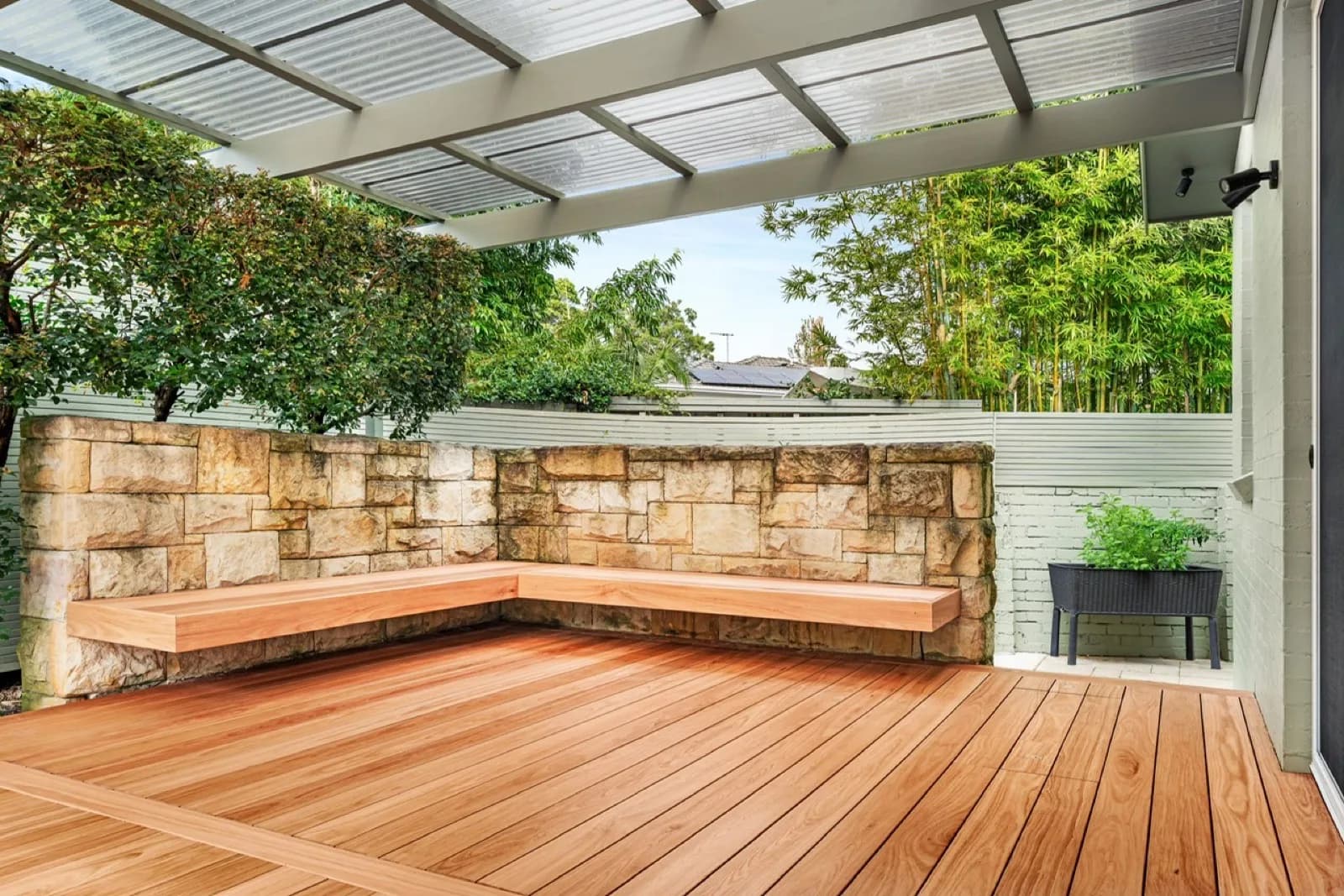
- Stairs, balustrades and extras. Steps, landings, handrails, privacy screens, built-in benches and fascia boards are each priced on top of the deck itself.
- Approvals. A deck that falls outside the exempt development rules needs a certificate or a development application, which adds fees and time.
Why does the height of the deck matter so much?
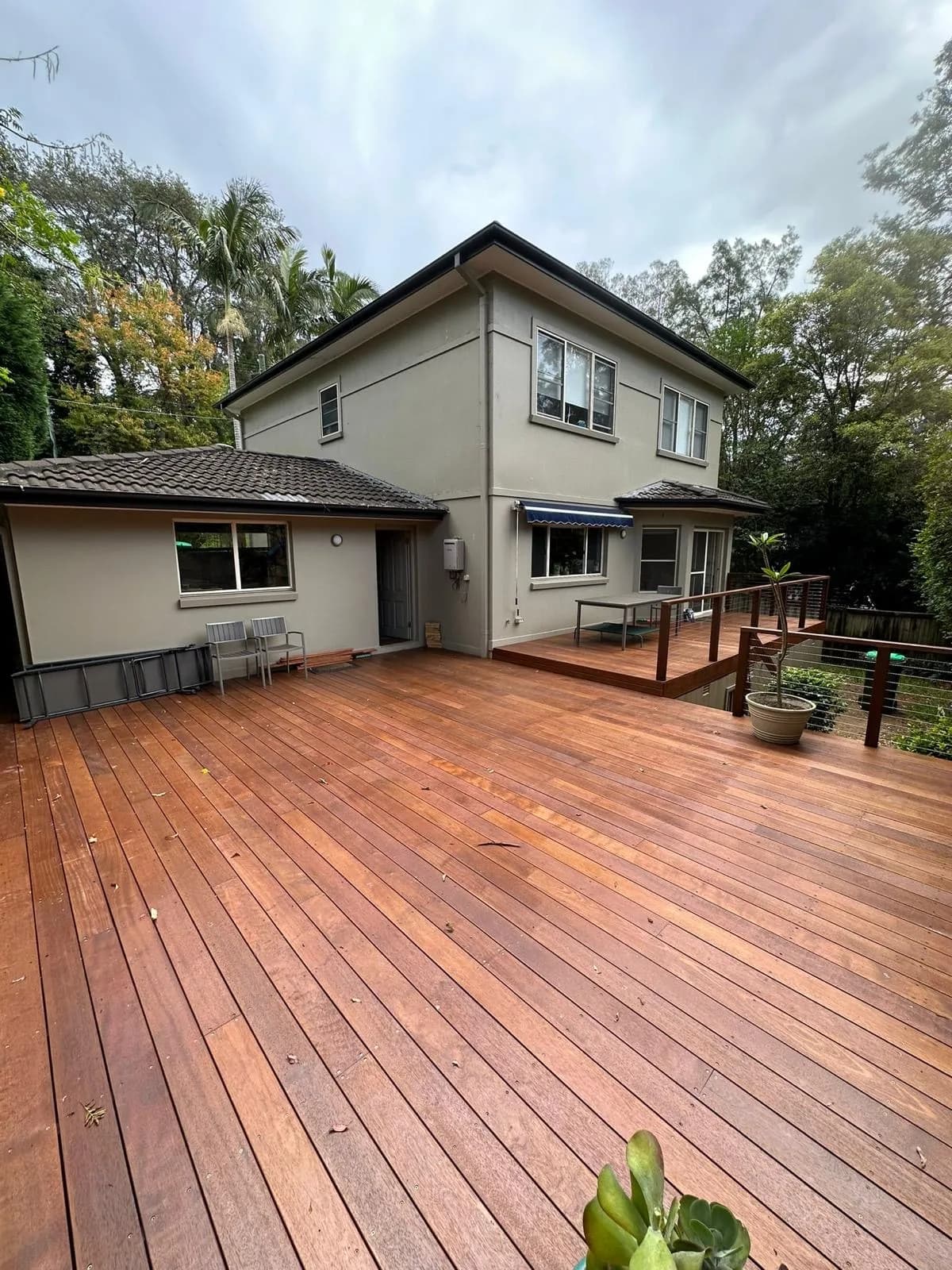
Height changes almost everything under the boards. On a deck that sits close to the ground, the frame is a simple grid of bearers and joists on short posts. As the deck gets higher, the posts get longer, the footings have to carry more load and the frame needs bracing so it doesn’t sway.
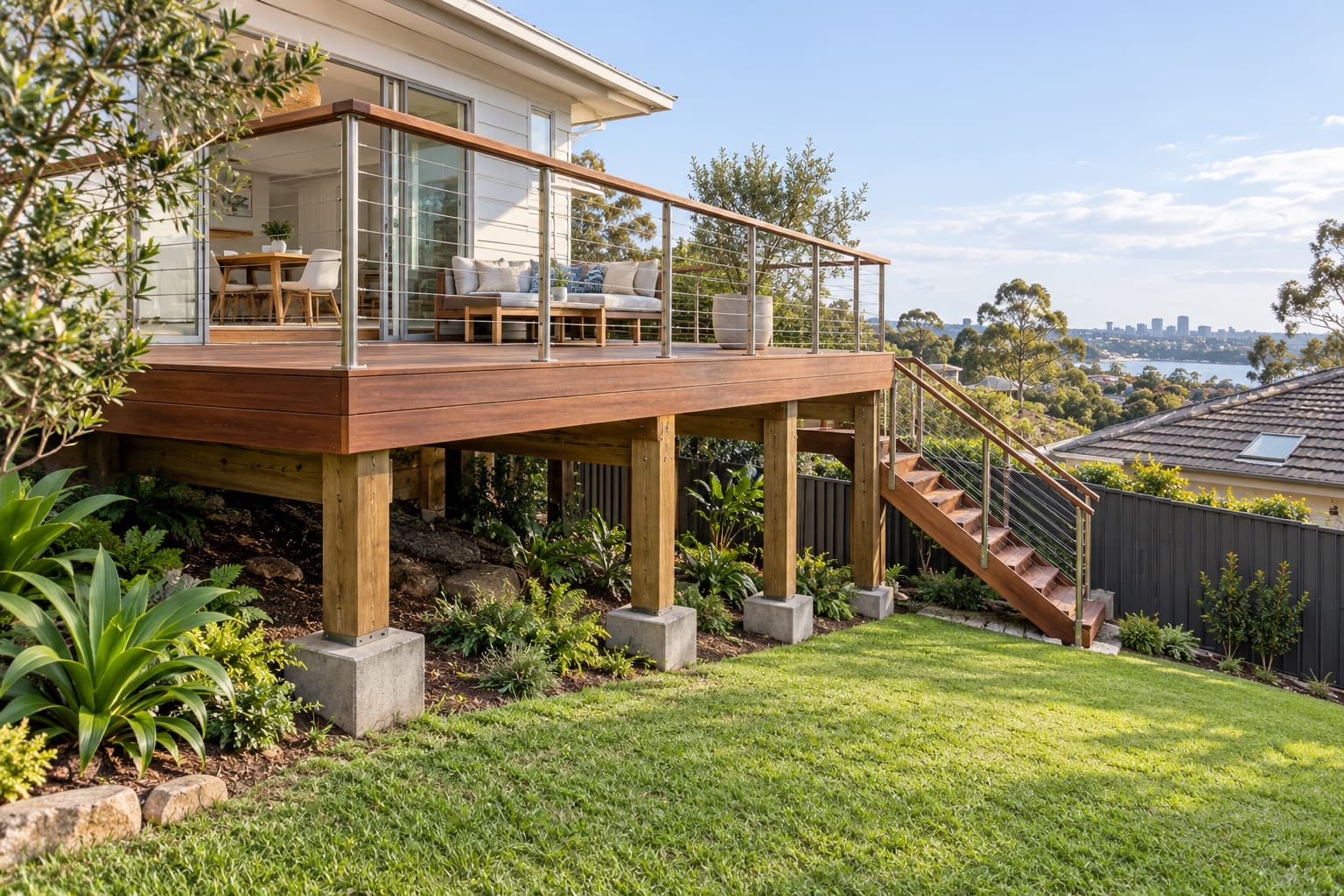
Height also brings stairs and a balustrade. Under the building code, a deck floor more than one metre above the ground below needs a balustrade, and every set of steps needs to meet rules for tread depth, riser height and handrails.
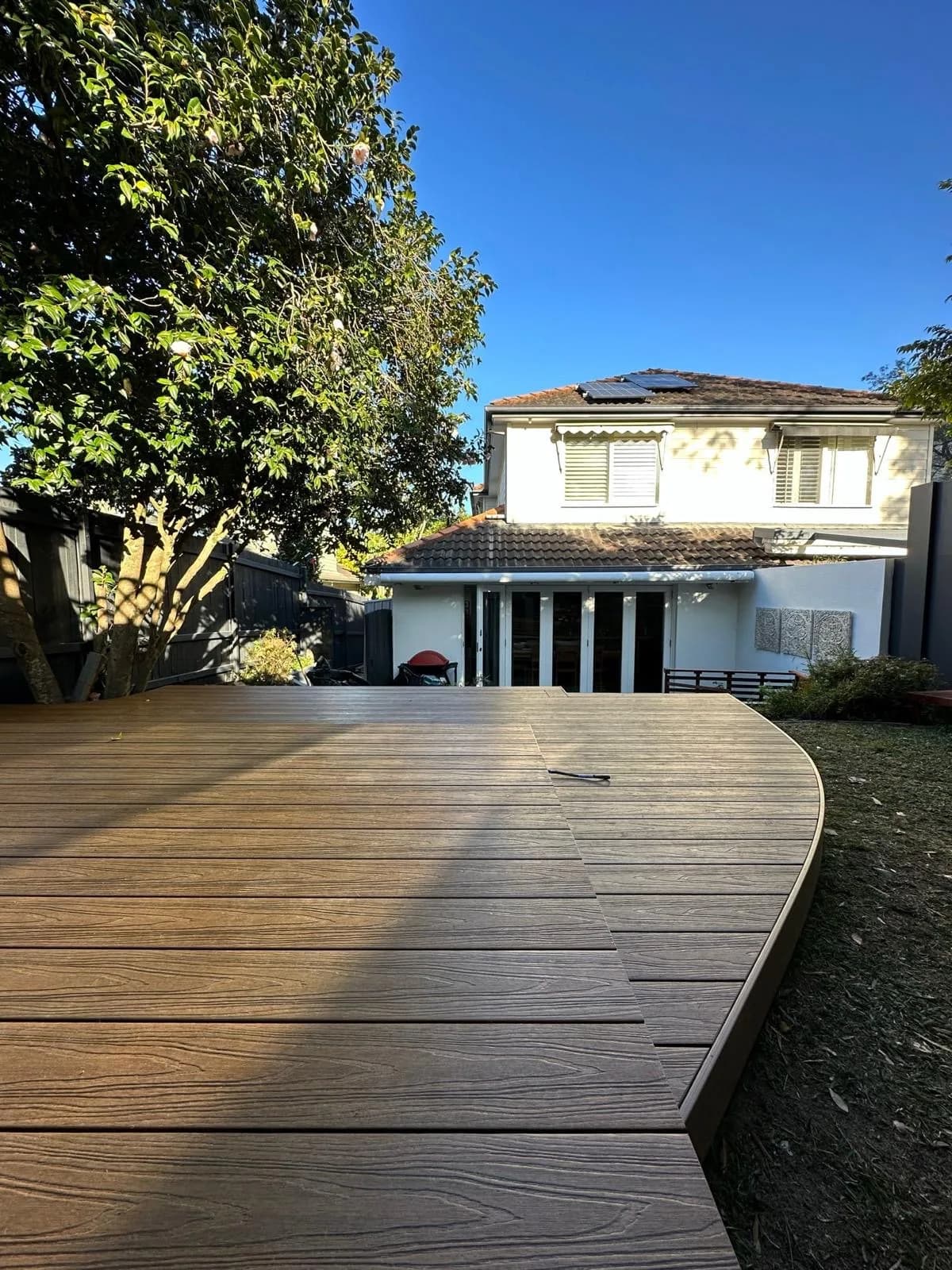
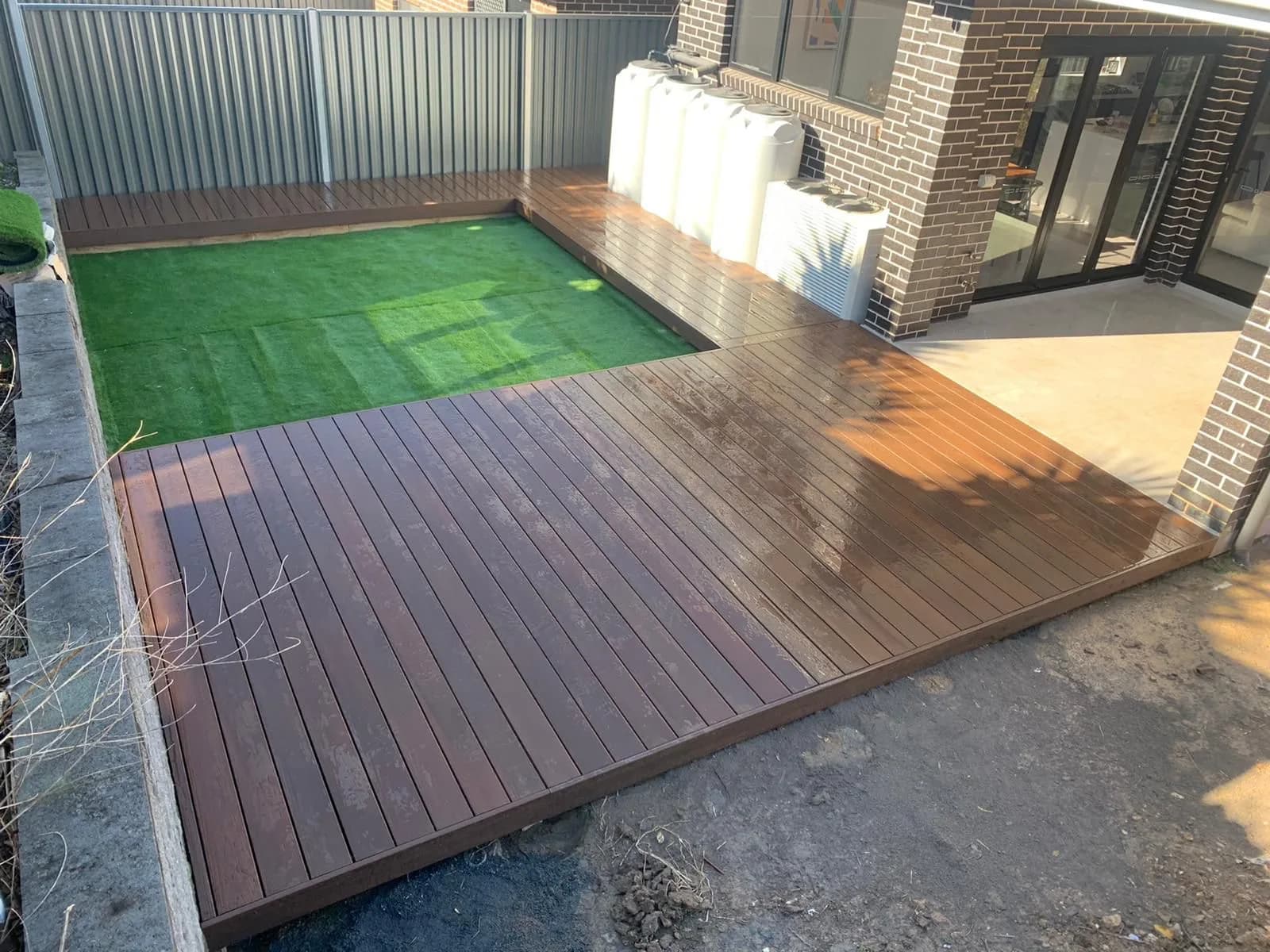
Our merbau deck in Wahroonga shows the difference. It sits high on a sloping bush block, so it needed a tall frame, timber stairs, handrails and a wire balustrade. A low deck in a new-build backyard, like our composite deck in Pemulwuy, needs far less of that work.
Does the choice of boards change the price much?
Yes, but less than many people expect, because the frame, labour and extras make up a large share of the total. As a rough order, treated pine is the least expensive board, hardwoods such as merbau, spotted gum and blackbutt sit in the middle to upper range, and composite boards usually cost the most to buy.
Composite also has its own installation rules. Manufacturers set the joist spacing, the gaps between boards and the clips or screws that must be used. Those rules can mean more joists in the frame than a timber deck of the same size.
Upkeep is part of the cost too. A timber deck needs cleaning and a fresh coat of oil or stain every so often. Composite needs washing but no oiling. Our guide to timber or composite decking covers that trade-off, and the decking materials guide compares the boards one by one.
What do the prices cover?
The bands in the short answer are per square metre for a deck up to a metre off the ground, with easy access and a flat or gently sloping yard. They cover the footings, the bearers and joists, the boards, fixings and fascia, the labour and clearing up afterwards. Everything below is priced on top:
- Treated pine
- $205–$400per m²
- Merbau
- $345–$630per m²
- Spotted gum
- $400–$690per m²
- Composite, including Trex
- $320–$805per m²
What the prices cover
- Footings, bearers and joists for a deck up to a metre high
- The boards, fixings and fascia
- Labour and clearing up the site
Priced separately
- Raised or high-set frame: $57–$205 per m² extra
- A flight of stairs: $1,150–$5,200 per flight
- Balustrade: $170–$520 per metre
- Removing an old deck: $23–$63 per m²
- Oiling or staining a timber deck
- Council or certifier fees, where approval is needed
A typical job
A 20 m² merbau deck close to the ground, on a flat yard with easy access, comes to about $6,900–$12,600. Add a flight of stairs and it is about $8,050–$17,800.
On a sloping block or a deck high off the ground, the frame extra applies to the whole deck, and stairs and a balustrade usually come with it. Our guides to stairs and balustrade costs and deck repair costs go into those in more detail.
What else ends up in a deck quote?
Beyond the deck itself, look for these lines in a quote:
- Removing the old deck. Pulling up the boards and frame and taking the timber away.
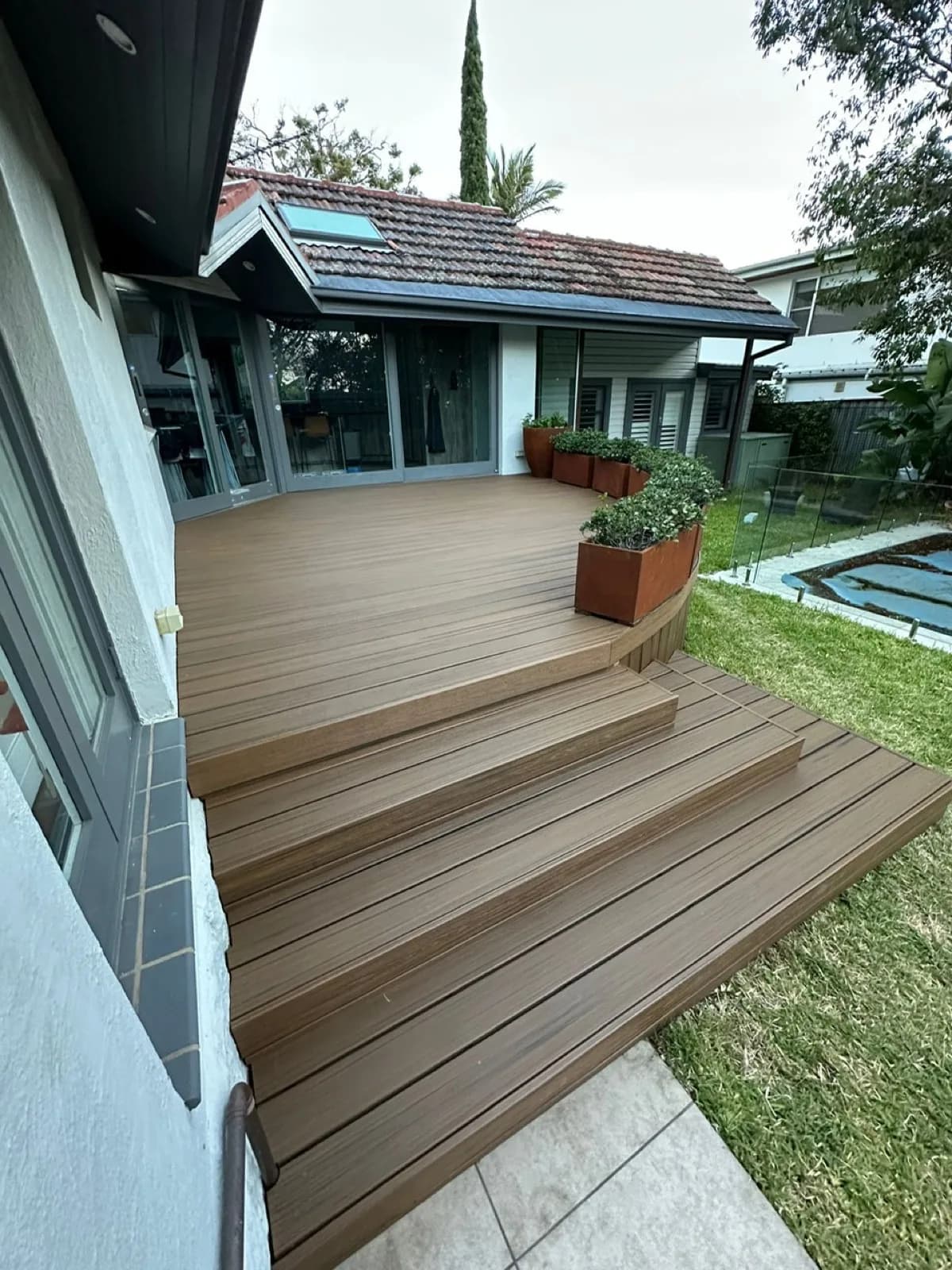
- Stairs and landings. At Bellevue Hill, wide composite steps run down from the curved deck to the paved path. Steps like these are priced on top of the deck.
- Balustrades and handrails. These are priced by the metre.
- Fascia boards. They finish the edge of the deck.
- Finishing. A timber deck is usually oiled or stained, and that can be priced in the same quote.
- Screens, benches and pergolas. These go in the same quote if you add them at the same time.
Will the deck need council approval?
Many decks in NSW can be built as exempt development, with no council or certifier approval. According to the NSW Planning Portal’s rules for balconies, decks and patios (checked October 2026), an exempt deck must be no more than 25 square metres, have a floor no more than one metre above existing ground level and sit behind the building line of any road frontage, among other conditions. Bush fire prone land and heritage areas have extra rules.
A deck outside those limits needs a complying development certificate or a development application. Both add fees and waiting time, so it’s worth knowing which path your deck takes before you settle on a design.
Our guide to council approval for decks and pergolas sets out every limit, and the approval check on our decking page gives a quick answer for your design.
Can an old deck be re‑boarded instead of rebuilt?
Often, yes. Before we quote, we check the bearers and joists, the footings and how water leaves the area. If the frame is sound, new boards can go on the existing frame, which costs much less than a full rebuild. If parts of the frame are rotten or undersized, we tell you, and we can price both options so you can compare.
How do you get a real figure for your deck?
Start by sending a few photos of the area, rough measurements and an idea of the boards you like. We then measure on site, check the height, slope and access, and give you a written quote.
When you compare quotes, make sure they cover the same things:
- the board species or product, and its size
- what the frame is made of and how it is fixed
- stairs, balustrades and fascia
- removal of the old deck
- the finish, if it is timber
- who arranges any approval.
Also check the builder’s licence on the NSW Government licence register. Timbaland Carpentry holds NSW Contractor Licence 276621C in the Carpenter class.
To start on your deck, try the deck designer on our decking page: choose the kind of deck, the boards and the colour, and your choices go straight into your quote request.